

If you’re exploring *If He Had Been With Me*, you’ll encounter heavy themes including suicide, grief-induced depression, anxiety, and hospitalization. The story follows Autumn through emotional collapse after losing Finny, complicated further by an unsupportive family environment and a shocking pregnancy discovery. Treatment approaches like therapy and medication are depicted honestly. If this book hits close to home, crisis support is available by calling or texting 988 and there’s much more to unpack ahead.
Key Takeaways
- *If He Had Been With Me* explores heavy mental health themes, including suicide, depression, anxiety, grief, and trauma, with an emotionally heartbreaking tone.
- Autumn’s mental health crisis after Finny’s death leads to hospitalization following a suicide attempt, highlighting grief’s devastating impact.
- The story depicts multimodal treatment, combining psychiatric evaluations, medication, and therapy to address severe emotional symptoms.
- Crisis support is available by calling or texting 988, connecting individuals with trained professionals during emotional distress.
- Reading literature with mental health themes can foster healing, self-reflection, and a sense of shared community understanding.
Heavy Content and Trigger Warnings to Know First

Before diving into *If He Had Been With Me*, you should know it carries substantial content warnings that may affect sensitive readers.
The novel explicitly addresses suicide, including a character’s suicide attempt, though the scene itself isn’t depicted in graphic detail. Two characters experience depression and suicidal thoughts, making mental health a central, emotionally heavy thread throughout the story.
Suicide and depression are central to this story, handled with emotional weight rather than graphic detail.
Beyond mental health, you’ll encounter teen pregnancy, sexual content, and sexual pressure woven into the narrative. Reviewers consistently describe the book’s tone as heartbreaking, with loss, trauma, family difficulties, and relationship tension adding to its emotional weight.
Additional concerns include underage drinking at parties and some profanity, including misuses of God’s name.
This is a teen romance and coming-of-age novel, not a clinical resource, so its portrayal of these topics is emotionally charged rather than educational. If any of these themes are triggering for you, approach the book with care. The story also continues into a sequel, *If Only I Had Told Her*, which carries similar trigger warnings for death, depression, suicide, and pregnancy.
What Mental Health Issues Appear in *If He Had Been With Me*?
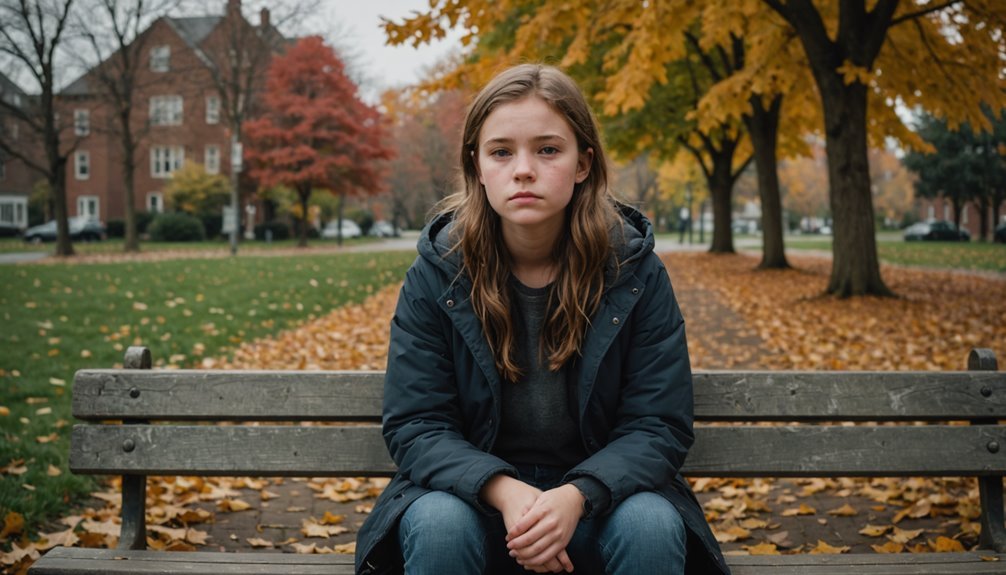
You’ll also notice anxiety and internal conflict running throughout the narrative.
Autumn privately feels things she can’t express outwardly, and much of her distress ties directly to social comparison, shifting friendships, and fear of rejection.
Loneliness intensifies gradually, connecting isolation to missed connections and regret over things left unsaid.
Her mother’s own mental struggles add household stress that compounds Autumn’s emotional instability.
The book doesn’t shy away from treatment either.
Autumn is forced to see a psychiatrist, and when she stops medication, her decline becomes severe.
Mental health here isn’t portrayed as one diagnosis it’s cumulative, affecting her relationships, behavior, and daily functioning. The story ultimately reaches its most devastating point through Finny’s unexpected death, which forces Autumn into a profound grief she is wholly unprepared to carry.
What Finny’s Death Does to Autumn’s Mental Health

When Finny dies, Autumn’s emotional world collapses almost instantly. The loss isn’t just grief over a friend it’s the destruction of a relationship and a future that never got the chance to exist.
Guilt over not acting sooner intensifies the pain, and her mental state deteriorates rapidly rather than stabilizing with time.
What follows is a severe downward spiral that moves through distinct and serious stages:
- Immediate emotional devastation — the grief hits hard and fast, disrupting everything.
- Depression — routine life becomes unmanageable, and the pain doesn’t fade.
- Mental health crisis — Autumn reaches a breaking point and attempts suicide.
- Hospitalization — the attempt leads to formal intervention, shifting the story toward survival.
You watch her go from heartbreak to crisis within the same narrative arc, and the novel doesn’t soften how quickly bereavement can become life-threatening. During her hospitalization, Autumn discovers she is pregnant with Finn’s child, a revelation that becomes a turning point and an unexpected source of hope amid her darkest moment.
How Autumn’s Family Situation Makes Everything Worse

Autumn’s grief doesn’t exist in a vacuum; her family situation guarantees it has nowhere to go. Her home life offers little emotional warmth, and the adults around her aren’t truly present. When you’re already struggling, that absence isn’t neutral it actively makes things worse.
Without reliable family support, Autumn carries her pain privately. She can’t bring her grief home and expect comfort, because home is already a source of tension. Every external stressor hits harder when there’s no safe space to recover.
This instability also chips away at her sense of self. Feeling unseen by your own family makes it harder to trust your emotions or believe your needs are valid.
For Autumn, the family environment doesn’t soften her suffering it amplifies it, stacking domestic conflict on top of grief until the emotional weight becomes almost impossible to manage. The story’s exploration of family dynamics and emotional struggles reflects how adolescence can be shaped by the very environments meant to provide safety and support.
Therapy, Medication, and Hospitalization in the Story

In *If He Had Been With Me*, you’ll see Autumn navigate a full spectrum of mental health care, from psychiatric evaluations and medication to eventual hospitalization after a suicide attempt.
Dr. Singh’s clinical assessments cover sleep, appetite, and suicidal thoughts, showing you what real depression screening looks like.
When Autumn stops taking her medication after trauma, her condition spirals, ultimately landing her in a locked psychiatric ward where crisis intervention becomes unavoidable. The novel also depicts an adult character hospitalized for suicidal thoughts, broadening the story’s portrayal of mental health struggles beyond just its teen characters.
Treatment Approaches Depicted
Throughout *If He Had Been With Me*, the treatment approaches depicted reflect a realistic and layered view of mental health care one that goes beyond a single fix.
You’ll notice how the story presents care as multimodal combining multiple tools rather than relying on a single one.
The treatment model includes:
- Therapy to address emotions, root causes, and coping skills
- Medication to reduce severe symptoms and make daily functioning more manageable
- Combined treatment where each approach fills the gaps the other can’t
- Ongoing coordination between prescribers and therapists through regular follow-ups and plan adjustments
Each element serves a distinct purpose.
Medication stabilizes.
Therapy builds.
Together, they create a foundation for steady progress, making this combined approach more effective than either method alone.
Hospitalization and Recovery
While combined therapy and medication form the backbone of the treatment model in *If He Had Been With Me*, the story also confronts a harder reality of what happens when support comes too late.
Autumn’s hospitalization follows her suicide attempt near the novel’s end, arriving as a sudden crisis rather than a gradual intervention. You see stabilization, not healing, a medical response that interrupts her daily life and signals how far the emotional decline had progressed unchecked.
Recovery, as the story frames it, is fragile and compressed. Therapy appears as an implied necessity given her grief, isolation, and collapse, though the narrative doesn’t detail a clinical plan.
Medication isn’t clearly depicted in available summaries. What you’re left with is aftermath—a reminder that delayed support often means responding to catastrophe instead of preventing it.
Mental Health Resources If This Book Hit Close to Home

If *If He Had Been With Me* stirred something deep in you, you don’t have to sit with those feelings alone.
You can reach out to a licensed therapist or counselor who’s equipped to help you process what’s coming up.
If you’re in crisis right now, call or text 988 to connect with the Suicide & Crisis Lifeline anytime, day or night.
Finding Professional Support
Here’s where you can start:
- Visit your local library — ask staff about free mental health or wellbeing reading collections.
- Talk to your doctor — clinicians can refer you to curated self-help resources through books-on-prescription programs.
- Search library wellness lists — many are organized by topic: anxiety, grief, depression, or trauma.
- Reach out to a counselor — reading supports healing, but professional care is irreplaceable when emotions run deep.
Crisis Helplines and Hotlines
You deserve support.
These lines exist for exactly this moment.
Conclusion
If you’ve just finished *If He Had Been With Me*, you might be sitting with some heavy feelings right now—and that’s okay. This book doesn’t shy away from grief, depression, or loss, and neither should you. You don’t have to process any of this alone. Reach out to someone you trust, explore the resources listed above, and remember that getting help isn’t a weakness. It’s exactly what Autumn needed, and it’s what you deserve too.
Frequently Asked Questions
Is *If He Had Been With Me* Based on a True Story?
No, *If He Had Been With Me* isn’t based on a true story. Laura Nowlin drew from “lots of different true things,” including her own experiences and friends’ stories, making it emotionally autobiographical but not literally true.
What Age Group Is *If He Had Been With Me* Most Appropriate For?
You’ll find *If He Had Been With Me* most appropriate for readers aged 14–18, especially those 15 and older. It’s best suited for mature teens who can handle heavy themes like mental health, grief, and heartbreak.
How Does the Seasonal Depression Element Affect the Story’s Timeline?
You see, seasonal depression compresses the story’s timeline by making Autumn’s winter lows feel cyclical. It shapes when she withdraws, why tensions build gradually, and makes the tragic outcome feel inevitable rather than sudden.
Does the Book Offer Hope or End on a Positive Note?
You won’t find a happy ending here. The book delivers emotional honesty over optimism—Finny’s death leaves Autumn in grief, and you’re left carrying unfinished love and unresolved pain rather than hope.
How Does Finny’s Personality Contrast With Autumn’s Emotional Struggles?
You’ll notice Finny’s outgoing confidence and spontaneous charm directly contrast Autumn’s deep emotional vulnerability and inner turmoil. While Finny defuses tension with charisma, Autumn carries her struggles within, highlighting the gap between outward resilience and private pain.