

In the novel, Autumn’s name isn’t just a seasonal label; it’s a symbolic blueprint for her entire journey. Derived from the Latin *autumnus*, meaning harvest and shift, it signals maturity, loss, and transformation before the plot even hints at them. Her name encodes four key themes: change, harvest, letting go, and introspection. It’s a built-in foreshadowing tool that shapes how you understand her arc from the very first page onward, and there’s far more to uncover ahead.
Key Takeaways
- Autumn’s name derives from Latin *autumnus*, meaning “harvest season,” immediately signaling themes of transition, maturity, and natural cycles within the novel.
- The name functions as built-in foreshadowing, anticipating the character’s arc of change, emotional decline, and transformation before the plot reveals it.
- Harvest symbolism reflects accumulated experience and sustained effort, representing the character’s inner growth and deepened self-awareness throughout the story.
- Falling leaves symbolize shedding what no longer serves, supporting the turning points at which the character releases outdated beliefs and outgrown attachments.
- Equinox imagery connects Autumn to a balance between light and dark, reflecting her emotional steadiness and graceful navigation of loss and renewal.
What the Name Autumn Means and Where It Comes From

The name Autumn comes directly from the Latin word *autumnus*, meaning “fall” or “the harvest season.” It traveled through Old French before settling into English by the 14th century, and some sources trace it even further back to an Etruscan root, though that connection isn’t confirmed.
What you’re working with here is a pure seasonal name, not a saint’s name, a royal title, or a family surname repurposed for a child. Its core meaning centers on harvest, natural abundance, and the shift between summer and winter.
Some naming resources also gloss it as “of the woods,” reinforcing its nature-based identity.
The name belongs to a category of nature-inspired English given names, pronounced AW-tum, and it’s generally treated as more poetic and formal than simply calling the season “fall.” That tonal quality shapes how readers likely receive it in fiction.
As a given name, Autumn was virtually unheard of before the 1960s, when bohemian cultural influences began drawing parents toward nature-based names during the flower power era.
How Authors Have Used Autumn to Represent Change and Maturity

When you read literature carefully, you’ll notice that authors consistently use autumn to mark the exact moment a character shifts from one phase of life to another.
The season’s harvest imagery often signals that a character has reached full maturity someone who’s accumulated experience and now stands at a productive peak.
You can trace this pattern across countless narratives where autumn doesn’t just set the scene but actively drives a character’s transformation. Falling leaves, in particular, carry the weight of loss and impermanence, mirroring a character’s own reckoning with what they must leave behind to move forward.
Autumn as Symbolic Transition
Autumn’s identity as a changing season makes it one of literature’s most versatile symbolic tools. When you read novels that use autumn settings, you’ll notice how the season connects summer’s fullness and winter’s dormancy, creating a natural parallel for characters moving between life phases.
Authors don’t choose autumn arbitrarily, its falling leaves, cooling air, and shorter days give you concrete imagery for abstract turning points. You can recognize this pattern when characters face shifting relationships, disrupted stability, or new responsibilities.
Autumn’s “in-between” quality places characters in liminal states where certainty gives way to adjustment. It also carries a mature tone, suggesting that innocence or impulsiveness has passed and that reflection and consequence now govern a character’s experience.
Change, in autumn, feels both inevitable and earned. In Zora Neale Hurston’s *Their Eyes Were Watching God*, autumn parallels the protagonist’s journey toward self-realization and renewal, demonstrating how the season can mark a character’s most defining transformation.
Maturity Through Seasonal Imagery
Ripeness gives autumn its most enduring literary power: the image of a full harvest tells you that effort has culminated, that growth has done its work, and that what remains is concentrated value rather than unfinished potential.
Authors use this seasonal logic to mark characters as fully formed rather than still becoming. Autumn’s introspective quiet signals that outward ambition has given way to inner evaluation, acceptance replacing resistance, reflection replacing impulse.
Autumn’s maturity symbolism operates across several registers:
- Harvest: effort concluded, value concentrated
- Falling leaves: shedding what no longer serves
- Animal preparation: foresight and practical wisdom
- Settled tone: seasoned judgment over youthful exuberance
When a character enters their autumnal phase, you recognize someone who’s earned their perspective rather than inherited it. John Keats captured this earned depth in “To Autumn,” where his rich language frames the season as one of fullness and ripeness rather than mere decline.
Change Within Character Arcs
Few literary seasons carry as much structural weight in character arcs as autumn does. When you read a novel where a character begins questioning their choices as leaves fall, you’re watching a writer use seasonal change to mirror internal transformation.
Autumn marks the shift from growth to reassessment, signaling that a character’s earlier certainty is giving way to something more complicated.
You’ll notice this technique works because autumn provides a visible external marker for change that doesn’t require explanation. The season’s movement from energy to decline naturally supports turning points at which characters shed outdated beliefs, release what no longer serves them, and enter a more mature stage.
Autumn doesn’t just decorate the narrative it structures it, giving the character’s transformation a recognizable rhythm tied to the natural world. Across ancient cultures, this seasonal threshold was regarded as a profound moment of inner reckoning, much like the autumn equinox’s balance of light and shadow, which marked both external and internal transitions.
How does Autumn’s name signal change throughout the Novel?

When you first encounter Autumn’s name, it’s already working as a quiet forecast of everything the novel’s going to put her through.
Her identity doesn’t just carry a seasonal label it signals that change isn’t something happening *to* her but something woven *into* her.
As you follow her arc, you’ll notice how the name keeps aligning with each turning point, reinforcing that her growth was always part of a natural, inevitable cycle.
Autumn’s Name Foreshadows Change
Autumn’s name carries built-in foreshadowing simply by existing, because the season it references has long been associated with change, decline, and the approach of endings.
Before she speaks a single line, her name signals that the story will shift from stability toward loss. You’re reading a quiet warning embedded in the text from the start.
Her name foreshadows several key movements in the narrative:
- The inevitability of emotional decline following Finny’s death
- A period of grief, hopelessness, and depression
- The release of certainty, plans, and connection
- A forced shift into a darker narrative and emotional phase
Autumn’s symbolism doesn’t represent loss alone it combines loss with transformation, suggesting that what breaks down eventually prepares the way for something changed.
Transition Reflected in Identity
Because her name belongs to a season caught between summer and winter, Autumn carries a built-in sense of being in-between not fully one thing or another.
You see this reflected in how her identity never feels fixed. She’s always shifting, reassessing, releasing what no longer fits.
Her name does the heavy lifting here. It signals that she’s not resisting change; she’s moving through it deliberately.
Like the season itself, she’s shedding old beliefs and gathering new insight before the harder stretch ahead. That combination of letting go and preparing for the future gives her identity both weight and direction.
You’re not watching a sudden transformation. You’re watching someone turn inward, evaluate what matters, and quietly become something more grounded than what she started as.
Seasonal Symbolism Drives Growth
Tied to a season built around change, Autumn’s name functions as a structural signal throughout the novel—one that tracks her development across multiple registers at once.
You’ll notice how each phase of her arc mirrors autumn’s layered symbolism—never static, always pointing forward or inward.
Her name quietly encodes four key signals:
- Transition: She marks shifting circumstances rather than stable ones
- Maturity: her growth comes through experience, not innocence
- Harvest: her gains emerge after sustained struggle
- Letting go: she sheds attachments that no longer serve her
Reading her name as seasonal shorthand, you can anticipate her trajectory before the plot confirms it.
The season doesn’t just describe her it actively shapes how her story unfolds and what her presence means.
Autumn as a Symbol of Harvest and Inner Growth
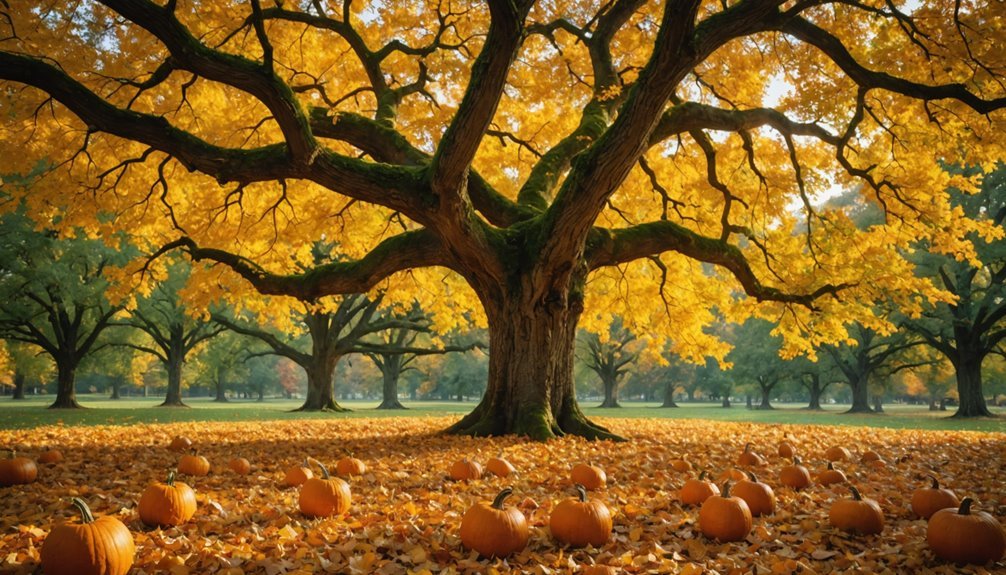
Rooted in seasonal rhythms, the name Autumn carries a layered symbolism centered on harvest and inner growth. You’ll notice that the character doesn’t simply mark a season she embodies what the season represents: the culmination of effort, the ripening of experience, and the quiet work of becoming.
| Harvest Symbolism | Inner Growth Symbolism |
|---|---|
| Reward of sustained effort | Deepened self-awareness |
| Tangible results from past choices | Reflection replacing outward action |
| Ripeness and readiness | Integration of lived experience |
| Bittersweet completion of a cycle | Maturity shaped by acceptance |
These paired meanings reinforce each other throughout the novel. When you examine Autumn’s arc, you see that her growth isn’t loud or sudden it’s accumulated, like a harvest. She moves inward, processes loss and change, and emerges with something harder to name but unmistakably present: wisdom earned through progression.
What Autumn’s Name Says About Balance and Letting Go?

Harvest and inner growth aren’t the only layers the name Autumn carries, balance and letting go run just as deep. If your name is Autumn, it connects you to the equinox, the moment when light and dark hold equal weight. That balance isn’t passive; it requires knowing what to keep and what to release.
Autumn’s symbolism shows that equilibrium comes through subtraction, not accumulation. Falling leaves aren’t a loss—they’re a deliberate clearing that makes steadiness possible.
Your name implies:
- Poise under change, staying centered while circumstances shift
- Thoughtful release, recognizing when habits or roles no longer serve you
- Self-regulation, favoring moderation over excess
- Adaptability, treating transformation as a natural rhythm rather than a disruption
Together, balance and letting go define Autumn as a name tied to mature emotional steadiness—someone who adjusts gracefully without losing their footing.
How Autumn’s Introspective Nature Reflects Everything Her Name Promises
Everything balances and releases toward Autumn’s name, converging in one final quality: introspection. When you look at what the name Autumn actually promises, you find a character built for observation, self-examination, and measured response. She doesn’t act impulsively. She weighs, reflects, and processes before she moves.
That tendency isn’t incidental. The season itself turns inward. Autumn marks a slowing rhythm, a moment to take stock and reevaluate what holds meaning. Your character carries that same orientation. She notices what others miss because she’s watching, not rushing.
The name also connects her to maturity and impermanence. Autumn’s seasonal symbolism links decline with depth, which means her introspective nature isn’t passive it’s shaped by recognizing that things change and end.
That awareness intensifies how she sees the world. Her name doesn’t just describe her. It delivers her. Every quality the season promises, she fulfills.
How Autumn’s Name Mirrors the Novel’s Cycle of Loss and Renewal
Autumn’s name doesn’t just describe a character, it maps a narrative arc. When you trace her story, you’ll notice the name quietly signals that loss isn’t the destination. It’s the turning point.
Autumn’s symbolic weight ties directly to how the novel structures hardship:
- Loss functions as a transformation, not permanence her name frames suffering as seasonal, not final.
- Endings connect to beginnings, reinforcing that what she releases creates space for something new.
- Decay enriches, much like falling leaves replenishing the soil, suggesting that her grief carries a generative purpose.
- Mortality and continuation coexist, echoing cultural readings that link autumn to life-death-rebirth cycles.
You’re not just watching a character grieve. You’re watching the novel use her name to argue that loss and renewal aren’t opposites they’re sequential.
Autumn’s name makes that argument before the story even begins.
What Autumn’s Name Symbolism Reveals About Her Character Arc?
Shift defines Autumn before she speaks a single word. Her name places her in a middle state, between what was and what’s coming, and that positioning drives everything you see in her arc.
She doesn’t arrive fully formed. She absorbs pressure, adjusts, and becomes something new through the accumulation of experience rather than sudden revelation.
Growth isn’t a single moment. It’s pressure absorbed, adjusted to, and slowly transformed into something new.
You’ll notice her growth feels measured rather than dramatic. That’s intentional. The name carries connotations of calm, reflection, and emotional control, suggesting that her development occurs internally before it surfaces outwardly.
She processes before she acts, and that restraint is a form of strength.
Conclusion
You’ve seen how Autumn’s name isn’t just a label, it’s a blueprint for who she’s meant to become. It signals change, signals harvest, signals the courage to let go. Every chapter reinforces what her name’s been quietly promising from the start. You now understand that the author deliberately chose this name, weaving its symbolism into her entire arc. Autumn doesn’t just carry a season’s name; she carries its complete, transformative meaning.
Frequently Asked Questions
What Emotions Do Readers Typically Associate With Characters Named Autumn?
You’ll likely feel warmth, nostalgia, and melancholy when you encounter a character named Autumn. You’ll also sense longing, tenderness, and quiet complexity, since the name carries deep emotional weight before she even acts.
Does the Name Autumn Appear More in Specific Fiction Genres?
You’ll find Autumn appearing most often in literary fiction, romance, fantasy, and coming-of-age stories. These genres favor symbolic names that carry emotional depth, seasonal atmosphere, and themes of change, maturity, and transformation.
How Does Autumn’s Name Compare Symbolically to Other Seasonal Names?
You’ll find Autumn sits between extremes: it’s more mature than Spring, less essential than Summer, and warmer than Winter, making it symbolically shifting, reflective, and grounded in completion rather than beginnings or stark endings.
Is Autumn’s Name Symbolism Interpreted Differently Across Various Cultures?
Yes, you’ll find that Autumn’s name carries different meanings across cultures. Agricultural traditions emphasize harvest and abundance, while literary contexts stress decline and endings. It’s not a fixed symbol—it shifts depending on cultural and traditional framing.
How Has the Name Autumn’s Popularity Influenced Its Use in Literature?
You’ll find that Autumn’s growing popularity made it a reliable literary tool—writers can now use it to signal transformation, maturity, and seasonal themes without seeming forced, since readers already recognize and connect with its imagery.