
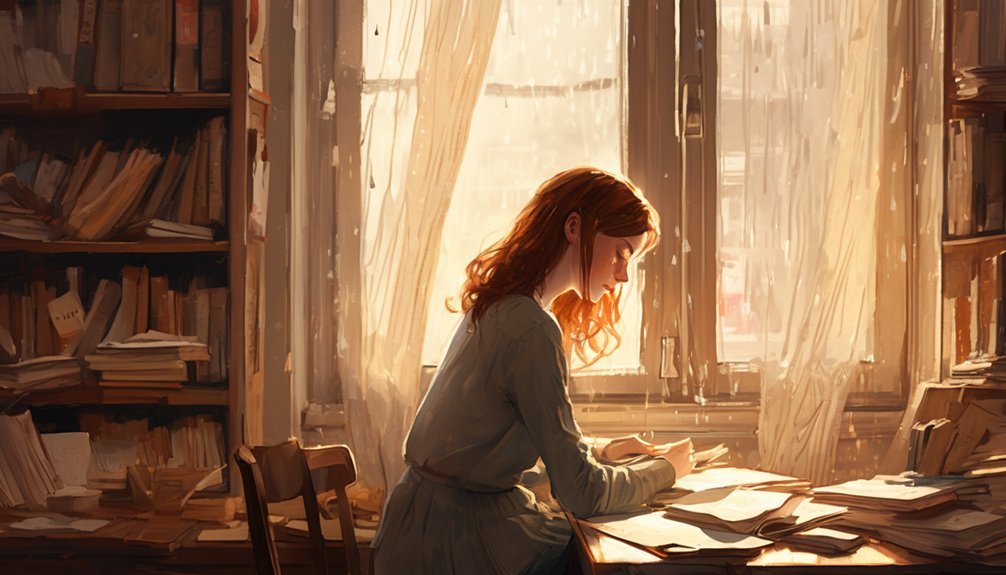
Finny isn’t based on one single real person. Laura Nowlin drew him from three boys she knew as a teenager — one who died, one she lost touch with, and one who stayed close. Each contributed something distinct to his character, from his sweetness to his emotional complexity. The emotional truth matters far more to Nowlin than any literal events. This is the complete breakdown of who inspired Finny, how the novel’s origin story shaped him, and how much of the book reflects real life.
Key Takeaways
- Finny is inspired by three real boys from Laura Nowlin’s teenage years, though the book is fiction, not autobiography.
- One of the boys died, and his sense of fragility heavily influenced Finny’s sweet, gentle nature.
- Each boy contributed distinct traits, but Finny feels like a whole character rather than a simple composite.
- The story’s emotional core originated from a dream Nowlin had about a girl loving a dying boy.
- Nowlin emphasizes emotional truth over literal events, with themes of grief and loss reflecting personal experiences.
Is Finny Based on a Real Person?

Laura Nowlin has confirmed that Finny is not based on one single real person. She drew him from three boys she knew during her teenage years — one who died, one she lost touch with, and one who stayed close. Each contributed something distinct to who Finny became on the page.
Nowlin has confirmed that a friend died unexpectedly, sharing Finny’s sweet nature as the only real similarity to that specific person. Beyond that, she is clear that the book is fiction. There is emotional truth throughout, but very little literal truth. The events of the novel did not happen the way the novel describes them. The feelings did.
This distinction matters for understanding how to read the novel. When Finny feels real — and he does feel real, to a remarkable degree — it is because Nowlin built him from real emotional experiences and real people, not because she was transcribing events from her own life. The craft lies in that transformation: taking something true and turning it into something fictional that carries the truth inside it.
Nowlin has spoken openly about her engagement with readers, responding to questions and clarifying character fates while expressing gratitude for the emotional connections her story has inspired. This openness is part of why readers feel comfortable asking whether Finny was real — and why Nowlin’s answer, when she gives it, feels satisfying rather than deflating.
Laura Nowlin: The Author Behind Finny
Understanding who Finny is requires understanding who Laura Nowlin is. She is a New York Times bestselling author based in St. Louis, Missouri, who holds a degree in English with a creative writing emphasis from Missouri State University. If He Had Been With Me was her debut novel, published by Sourcebooks Fire in April 2013. It found a new, massive audience through BookTok more than a decade after its original publication, eventually selling over one million copies.
Nowlin is notable for the openness she has brought to discussing her creative process and personal history in relation to the novel. She has spoken publicly about the depression that precipitated the dream that became the book’s title and emotional core. She has discussed the real people who influenced her characters. She has responded directly to readers’ questions about character fates and story decisions in ways that few debut authors do.
This openness creates a particular kind of relationship between readers and the novel. When readers wonder whether Finny was real, they are not speculating idly — they are responding to an invitation Nowlin has extended by being so transparent about her sources. The question “is Finny based on a real person” is a natural extension of reading a novel that feels this emotionally specific and this personally invested.
The answer — that he is based on three real boys, that one of them died, that the novel’s emotional architecture comes from real grief — does not diminish the fiction. If anything, it deepens it. Knowing that Nowlin’s real loss is inside the novel makes Finny’s fictional death carry a different kind of weight.
The Three Real Boys Who Shaped Finny’s Character

Though Nowlin hasn’t named them outright, she has confirmed that three real boys from her teenage years shaped Finny’s character — one who died, one she lost touch with, and one she stayed close to. Each contributed something distinct to who Finny became on the page.
The boy who died left the sharpest mark. His absence gave Finny that undertone of fragility — the sense that someone bright and essential can simply disappear. This is the emotional source of what makes Finny’s death feel so specifically devastating. It is not the fictional logic of the plot that makes it land — it is the real emotional memory of someone who was there and then wasn’t.
The boy she lost touch with informed Finny’s emotional complexity, that feeling of a connection that mattered deeply but slipped away without a clean ending. This maps onto the years Autumn and Finny spend in separate social worlds, the practiced distance between two people who once knew everything about each other.
The boy she stayed close to grounded Finny in something warmer and more sustained, giving him loyalty and consistency. This is the Finny who shows up at Autumn’s house after Jamie’s betrayal, who pulls her out of her depression through simple companionship, who never quite stops being present even when they are officially estranged.
What’s striking is how Nowlin layered all three into a single character. Finny doesn’t feel like a composite — he feels whole. That’s the craft: drawing from real people without letting the seams show.
How a Dream About a Dying Boy First Shaped Finny’s Role

Before Laura Nowlin wrote a single word of the novel, she had a dream. The dream came after a depressive episode that required hospitalization. In it, a girl loved a boy who died, and she believed his survival depended on being with her. That haunting premise became the story’s emotional core — and its title, If He Had Been With Me, came directly from it.
Finny was that dying boy. The dream locked in his tragic endpoint before Nowlin even grew attached to him as a character. She has spoken about resisting it, adding more time between Autumn and Finny and leaving a piece of him with her forever — but she ultimately honored what the dream demanded. His death was never an afterthought. It was always the point.
This origin story also explains something important about how the novel is structured. It opens with Finny already dead. The reader knows from the first pages that he is gone. Nowlin made this choice deliberately because the dream began from that place of absence — the girl loving someone who was already gone, wondering if her presence could have changed things. The title is not a statement of regret about the accident. It is a statement of grief about the entire relationship: if he had been with her, truly and finally, would things have been different?
Nowlin has spoken about how books allow individuals to experience multiple lives in one lifetime, and in writing Finny’s story, she gave readers a life — and a loss — they could carry as their own.
How Much of If He Had Been With Me Is Based on Real Events?

Nowlin has confirmed that minimal literal events made it into the narrative. Instead, the book operates on emotional truth. Here is what is actually real:
- The opening scene and title came directly from a dream following her hospitalization for depression.
- Finny is a composite of three real boys from her teenage years.
- One of those boys died, providing the emotional template for Finny’s death.
- Every character carries fragments of Nowlin’s lived experience, particularly Autumn’s mother, who reflects strong authorial self-insertion.
The plot’s themes — depression, grief, the weight of unspoken feelings, the specific texture of adolescent friendship dissolving — are not fabricated for drama. They are emotional excavations. Nowlin is telling you something true, just not something literal.
This is an important distinction for readers who wonder how autobiographical the novel is. It is deeply autobiographical in the sense that every emotion in it was felt by someone who lived through something. It is not autobiographical in the sense that the events happened. The accident did not happen. The high school social divisions did not happen this way. The characters did not exist as described. But the grief at the center of the novel — the specific grief of loving someone you never fully got to love, of timing that is simply cruel, of a future that almost existed and then didn’t — that grief is real.
How Emotional Truth Differs From Literal Truth in Fiction
Laura Nowlin’s approach to autobiography in fiction — taking real feelings and transforming them into fictional events — is one of the most common and most effective ways that literary fiction works. It is how many of the most emotionally resonant novels are created. The author does not need to have lived through the specific events they describe. They need to have felt the specific emotions those events generate.
In Nowlin’s case, she had felt the grief of losing someone — the friend who died contributed to this. She had felt the specific ache of a connection that slipped away without resolution — the friend she lost touch with contributed to this. She had felt sustained, loyal love — the friend she stayed close to contributed to this. These feelings, distilled and transformed, became Finny.
This process is different from writing autobiography, and it is different from writing pure invention. It sits between them, drawing emotional accuracy from lived experience while retaining the freedom that fiction allows for shaping events into meaning. The result is a character who feels true — not because he is literally real, but because the feelings he embodies are real.
For readers who find themselves grieving Finny after finishing the novel, this context is worth sitting with. You are not grieving a fictional invention. You are grieving something Nowlin actually lost and actually felt, rendered in a form that allowed you to feel it alongside her. That is what the best fiction does: it makes private grief public, and in doing so, it makes private grief feel less alone.
How the Novel Compares to Similar YA Novels With Real Inspirations
Many of the most emotionally powerful young adult novels were shaped by real events and real losses in their authors’ lives. John Green has spoken about the real people who inspired his characters. Gayle Forman has discussed personal grief informing her work. The pattern is consistent: the novels that readers describe as feeling “real” tend to be the ones where the author drew from actual emotional experience rather than constructing emotional experience from scratch.
If He Had Been With Me fits this pattern. The specific quality of its grief — the way it captures what it feels like to lose someone you never quite had, to love someone you never fully admitted to loving — comes from Nowlin having felt some version of that grief in real life. The three boys who shaped Finny are the source of that specificity.
This also explains why the novel’s BookTok revival worked so effectively a decade after publication. The emotions it generates are not time-stamped. The grief of almost having something and then losing it is not specific to 2013 or 2023 or any other year. It is a permanent human experience, and Nowlin’s novel captures it with the precision that only comes from having lived through it.
Readers who want to see how this novel connects to its companion work can explore our article on If He Had Been With Me vs The Way I Am Now, which covers how Nowlin’s approach evolved between the two books.
How Did Laura Nowlin Make Finny’s Exceptional Goodness Believable?

Making a character almost saintly without losing the reader’s trust is one of fiction’s hardest challenges — and Nowlin pulls it off with Finny by grounding his goodness in specific, tangible moments rather than vague declarations.
Nowlin also balances that goodness with real complexity. Finny is not perfect. He stays in a relationship he should have ended years earlier. He maintains social distance from Autumn even when it causes both of them pain. His protective instincts, which ultimately kill him, are part of who he is rather than a single heroic choice. In the companion novel If Only I Had Told Her, Nowlin writes from Finny’s viewpoint, laying his inner complexities bare so he reads as human rather than idealized. That balance makes his exceptional qualities land harder — you believe his goodness because you have also seen his limitations.
What Makes Finny Feel Real to Readers
The reason Finny resonates so strongly with readers is not just that he is a well-written character. It is that he feels like a specific person — someone recognizable rather than invented. Readers who love this novel consistently describe Finny in terms that suggest he felt real to them: they miss him specifically, not just as a plot element. They grieve him the way you grieve someone you actually knew.
This response reflects Nowlin’s craft in using real emotional sources for her character. The three boys she drew from were real people with real qualities — fragility, complexity, loyalty — and those qualities translate into the fiction with a specificity that purely invented characters rarely achieve. You can feel the difference between a character drawn from life and one constructed from narrative convenience, and Finny falls clearly in the former category.
The response also reflects something true about grief and fiction more broadly. When a fictional character dies and readers feel real grief, it is often because the writer accessed something genuinely painful to create them. Nowlin’s personal experience of loss is present in Finny — not as autobiography, but as emotional authenticity.
Frequently Asked Questions
Did Laura Nowlin Maintain Contact With the Boys Who Inspired Finny?
Based on Nowlin’s public statements, one of the boys died, which ended that connection. She has not confirmed ongoing contact with the others. What she has said publicly focuses on the emotional contribution each person made to Finny’s character rather than on her current relationship with them.
How Long Did It Take Nowlin to Write If He Had Been With Me?
Nowlin has not publicly specified the exact timeline for writing the novel. What is known is that the dream that inspired it came during a depressive episode that led to her hospitalization, and the book was published by Sourcebooks Fire in April 2013 as her debut novel.
Did the Real Boys Know They Inspired Finny’s Character?
There is no public confirmation that the real boys knew they inspired Finny. Nowlin has not mentioned telling them in her public interviews or blog posts, and no statements from the individuals themselves exist in public sources.
Has Nowlin Written Other Characters Inspired by Real People?
Yes. Nowlin has confirmed that every character contains aspects of herself and people she has known. Autumn’s mother, in particular, embodies aspects of Nowlin herself in many ways, showing she consistently draws from real life when crafting her characters. This is consistent with how most literary fiction works — characters are composites of observed human behavior and experience rather than transcriptions of specific individuals.
Is There a Sequel or Companion That Gives More of Finny’s Perspective?
Yes. Laura Nowlin published If Only I Had Told Her in 2024, a companion novel that retells the events of the original from Finny’s perspective through journal entries. It gives readers access to his inner life, his feelings for Autumn, and his experience of the same moments the original shows only through Autumn’s eyes. For readers who wanted to understand what Finny was thinking across all the chapters where he is present but silent, this companion is the direct answer. See our series guide for more.
Is Autumn Based on a Real Person?
Autumn is the character most directly influenced by Nowlin herself. Nowlin has spoken about the depression that informs Autumn’s mental health journey, the mother-daughter relationship that mirrors elements of her own, and the emotional experience of loving someone without fully acknowledging it. Autumn is not autobiographical in the sense that her life events mirror Nowlin’s — but her inner emotional life is drawn from Nowlin’s real experience more directly than any other character in the novel.