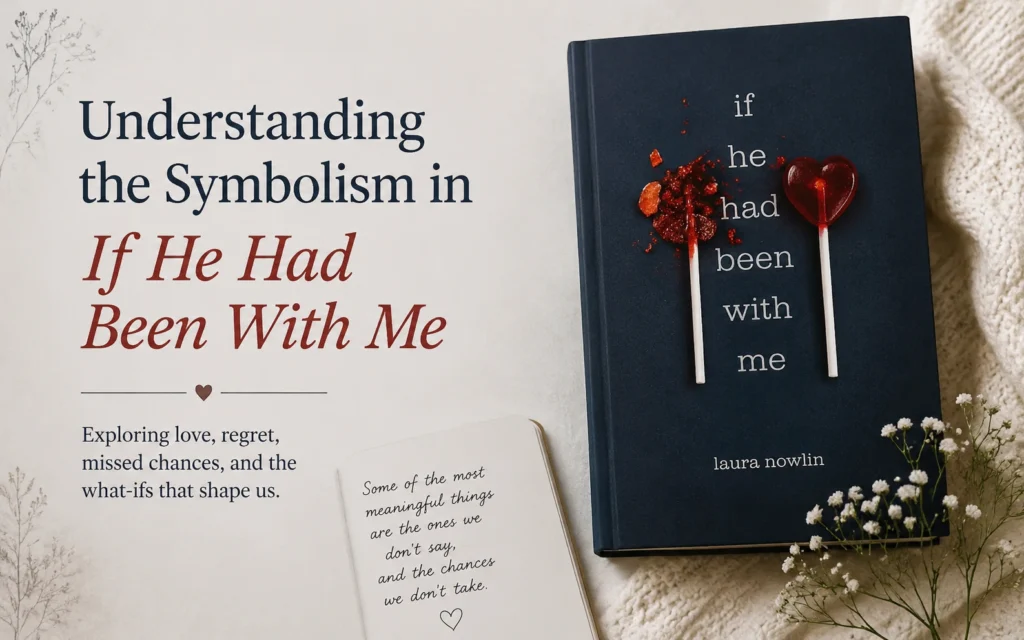

If He Had Been With Me by Laura Nowlin is best suited to readers aged 15 and up. It is published as Young Adult, but its honest depiction of a suicide attempt, teen sex, an unplanned pregnancy, and sustained grief places it firmly at the higher end of that range. A mature 13 or 14-year-old can handle it with adult support and conversation, but it is not a book for younger middle-grade readers.
Knowing what you are walking into is not a weakness before an emotionally heavy book. It is good reading practice. This guide gives you the recommended age rating first, then a complete trigger warning list, how intensely each topic is handled, and clear answers for specific ages so you can decide with confidence.

Age Rating at a Glance
| Recommended age | 15 and up (mature 13–14 with guidance) |
| Publisher category | Young Adult (Sourcebooks Fire) |
| Sexual content / spice | Low and non-explicit |
| Violence or gore | None graphic; one sudden, non-gory death |
| Heaviest themes | Suicide attempt, grief, teen pregnancy, depression |
| Overall intensity | Light for two-thirds, then very heavy in the final quarter |
If your main question is how steamy the book gets rather than how heavy, see our dedicated guide to how much spice and sexual content is in If He Had Been With Me. This page focuses on age suitability and emotional content.
What Age Is If He Had Been With Me Appropriate For?
The book is marketed as Young Adult, a label that technically spans roughly ages 12 to 18. In practice the content sits at the older end of that band. Here is how it breaks down by reader age.
Under 13: Not Recommended
The novel deals with suicide, sex, teen pregnancy, and sustained grief in ways that need real emotional maturity to process. Younger readers are better served by age-appropriate YA first and can return to this one in a few years.
Ages 13 to 14: Approach With Guidance
A mature 13 or 14-year-old can follow the story without difficulty, and many do. The concern is not reading level, it is emotional weight. The suicide attempt in particular asks for a level of context and resilience that not every reader this age has yet. Reading alongside a trusted adult, or simply talking before and after, makes a real difference. If a young reader is personally navigating depression or mental-health challenges, approach this book carefully or wait.
Age 15 and Above: Generally Appropriate
This is the intended readership. Most readers 15 and up handle the themes well, especially with some familiarity with emotionally complex YA. The sexual content is mild compared to adult romance, the grief is realistic rather than exploitative, and the mental-health portrayal is handled with care.
Adult Readers
Fully appropriate. Many adults who found the book through BookTok say the emotional impact lands just as hard, sometimes harder, because they can read Autumn and Finny’s missed chances through the lens of their own hindsight.
Is If He Had Been With Me Appropriate for a 13-Year-Old?
It depends on the individual 13-year-old. The book contains a suicide attempt, teen sex, an unplanned pregnancy, and prolonged grief, all of which call for emotional maturity. A 13-year-old who reads widely and has adult support can read it, but it is not automatically appropriate at that age. If there is any doubt, read it first or read it together.
Is If He Had Been With Me Appropriate for a 14-Year-Old?
For most 14-year-olds, yes, with a little awareness of what is coming. Fourteen sits right at the threshold where the book’s themes become manageable for many readers. The sexual content is non-explicit and the violence is minimal, so the real question is whether the reader is ready for the suicide attempt and the grief in the final quarter. A brief heads-up beforehand is usually enough; younger or more sensitive 14-year-olds may want an adult nearby for the ending.
Is If He Had Been With Me Appropriate for Middle Schoolers?
For most middle schoolers, no. Middle school covers roughly ages 11 to 14 (grades 6 to 8), and this book is written for, and best handled by, the older end of that range and up. The suicide attempt, teen sex, an unplanned pregnancy, and the sustained grief in the final quarter ask for more emotional maturity than many younger middle schoolers have developed yet.
Breaking it down by grade: 6th and 7th graders (ages 11 to 12) are better off waiting a couple of years. An 8th grader (around 13 to 14) who reads widely and has adult support can handle it, but it is worth reading alongside them or talking it through before and after. And if a middle schooler is personally navigating depression or anxiety, it is best to hold off for now. In short, this is an early-high-school book more than a middle-school one.
Full Trigger Warnings List
These warnings are drawn from the reader community and critical reviews; the book itself carries no printed content warnings. None of the content below is graphic, but several themes are emotionally intense.

Suicide and Suicide Attempt
This is the most significant warning in the book and the one most readers mention first. Autumn attempts to take her own life after Finny’s death. The attempt is not graphically described, but it is not glossed over either. Nowlin shows Autumn’s slow descent over several chapters and treats the attempt as a turning point rather than a shock device. If you are sensitive to depictions of suicidal ideation or attempts, this is the most important warning to note.
Death of a Character
Finny’s death is the emotional centerpiece of the novel. The book opens with a flash-forward, so you know from the first page that something is coming. When it arrives, it is sudden: after a car crash during a rainstorm, Finny rushes to help and is electrocuted by a downed power line. It is not gory, but it is abrupt and devastating, and the grief that follows is sustained and realistic. For the full sequence, see our breakdown of how Finny dies.
Depression and Mental Health
Autumn lives with depression throughout the novel, and her mother struggles with a mental-health condition too. Nowlin portrays both with genuine care: Autumn sees a psychiatrist, is prescribed antidepressants, and her depression is treated as a real medical reality rather than a plot device. Seasonal lows, emotional withdrawal, and the slow work of recovery are all depicted honestly.
Sexual Content
The book contains sexual content between teenage characters, but it is not explicit or graphic. There are references to sex, conversations about readiness and timing, and one emotionally weighted scene between Autumn and Finny. Some readers note that it shows unprotected sex without addressing consequences beyond pregnancy, which parents of younger readers may want to know. For a fuller look at the spice level, see is If He Had Been With Me spicy.
Teen Pregnancy
Two characters become pregnant over the course of the novel. Autumn’s friend Angie becomes pregnant in high school, and Autumn herself is discovered to be pregnant at the very end after her night with Finny. Neither is framed as a tragedy in isolation, but both carry real emotional weight. For how this ties into the finale, see our ending explained guide.
Alcohol and Substance Use
Teenage characters drink at parties throughout the novel, including a scene where Autumn becomes intoxicated enough that Finny calls to check on her. Drug use is referenced but is not a central focus.
Emotional Pressure and Relationship Control
Jamie pressures Autumn on several occasions, pushing her to give up writing for a more practical path and toward physical intimacy before she is ready. It is not depicted as overt abuse, but the dynamic of control and quiet dismissiveness may feel resonant or uncomfortable for readers in similar situations.
Parental Absence and Family Instability
Autumn’s father is emotionally absent, her parents’ marriage deteriorates and ends, and her mother’s mental-health struggles mean Autumn often lacks adequate support. These threads run quietly through the whole book rather than landing in single dramatic moments.
How Heavy Is the Book Overall?
It is not heavy all the way through. The first two-thirds are slow-burning and at times genuinely lighthearted, focused on high-school friendships and the growing tension between Autumn and Finny. The emotional weight concentrates in the final 80 to 100 pages. Many readers describe being lulled into comfort before the ending takes it all apart.
That structure is worth knowing in advance. Pick the book up expecting a breezy YA romance and the final quarter will hit far harder than if you go in prepared.
What the Sequel Adds
If you plan to continue with If Only I Had Told Her, the warnings carry over and expand a little. The sequel deals more directly with grief as an ongoing experience, shows Autumn in active recovery, and explores the aftermath of trauma across several characters, including Jack Murphy. It is heavier in places but ultimately moves toward healing in a way the first book does not fully reach. For which to read first, see our reading order guide for Laura Nowlin’s duology.
Frequently Asked Questions About Age and Content
What is the official age rating for If He Had Been With Me?
There is no formal age rating like a film certificate. It is published as Young Adult, which generally designates readers aged 12 to 18. Given the content, most reviewers and readers recommend it for ages 15 and up rather than the full YA range.
Is If He Had Been With Me appropriate for middle schoolers?
For most middle schoolers, no. The book is best for ages 14 to 15 and up. Younger middle schoolers (11 to 12) are better off waiting; a mature 8th grader can read it with adult support, given its themes of suicide, teen sex, pregnancy, and grief.
Does If He Had Been With Me have graphic content?
No. The sexual content is non-explicit, the death is sudden but not gory, and the suicide attempt is not described in graphic physical detail. The book’s weight comes from emotional depth, not graphic scenes.
Is If He Had Been With Me appropriate for sensitive readers?
Readers personally navigating depression, grief, or suicidal thoughts should approach it with care. The mental-health portrayal is realistic and compassionate, but it is also unflinching. It can be deeply meaningful for some sensitive readers and genuinely hard for others.
Does the book have a content warning printed inside?
No. The book does not carry formal printed content warnings. The warnings in this guide are drawn from the reader community and critical reviews rather than official publisher labeling.