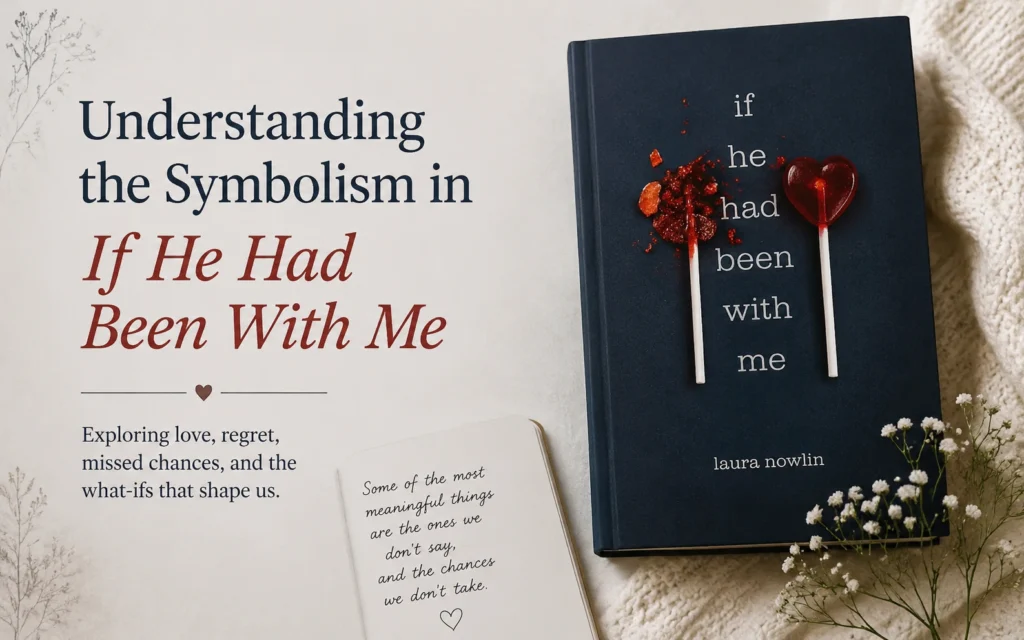

The first time you read If He Had Been With Me, you read it as a story unfolding in front of you. You are discovering who these people are, learning the shape of their world, finding out what happens. There is suspense even if you do not fully register it as suspense. The emotional gut-punch at the end lands because you did not see it coming fully, or you saw it coming and could not stop it anyway.
The second time is a completely different experience. And in many ways, a more painful one. Because the second time through, you are reading a story you already know the end of. Every scene that seems light or ordinary reveals its weight. Almost every moment between Finny and Autumn carries the knowledge that the almost will never become anything else. The foreshadowing Nowlin embedded throughout the novel becomes visible in a way it was not before, and that visibility is devastating.
The Foreshadowing You Missed the First Time
Laura Nowlin plants signals throughout the novel that are easy to miss on a first read and impossible to ignore on a second. The foreshadowing in If He Had Been With Me is subtle enough that it does not feel like foreshadowing in the moment. It feels like an atmosphere. Like texture. Like the ordinary details of a life being lived.
On a reread, you understand that these details were never just texture. They were signals. The novel was telling you where it was going all along. The emotional violence of the ending is something Nowlin prepared you for from the very beginning. You just did not speak the language the first time through.
Rain and Weather as Mood Markers
The rain symbolism throughout If He Had Been With Me is something first-time readers register as mood-setting and rereaders recognize as structural. Certain kinds of weather cluster around certain kinds of moments. The atmosphere is not decorative. It is doing thematic work. Once you know to look for it, the pattern becomes clear, and the pattern tells you something about what the novel is actually built around.
The Way Finny Looks at Autumn
On a first read, the moments where Finny’s attention to Autumn seems slightly more intense than a friend’s attention should be registered as character color. Interesting. Suggestive maybe. But easy to set aside because the novel does not force you to sit with them.
On a reread, you cannot set them aside. You know what those moments mean. You know that Finny loved Autumn and could not say it, and so every scene where that love is visible in his behavior but unnamed becomes a small tragedy you are watching happen in slow motion. The scenes are the same. The experience of reading them is entirely different.
Scenes That Hit Completely Differently the Second Time
Every Ordinary Moment Between Finny and Autumn
The first read gives you these scenes as relationship-building. You are learning who Finny and Autumn are as a pair. The second read gives you these scenes as something closer to requiem. You are watching two people inhabit a closeness that will be permanently severed, and you know it, and they do not.
The second reading turns every ordinary scene between Finny and Autumn into one about time running out. The lightness becomes unbearable precisely because you know it is temporary.
Angie’s Pregnancy
The pregnancy subplot reads differently on a reread because you understand its structural function more clearly. Angie’s pregnancy foreshadows the ending in ways that a first-time reader does not necessarily register. It introduces themes of futures being permanently altered by single moments, of lives taking unexpected turns that cannot be reversed. On a reread, the connection between this subplot and the main narrative becomes legible in a way it was not before.
The Car
Any scene involving cars or driving in the novel carries a different weight on a reread. You know what is coming. You know how it ends. The symbolism of the car accident extends backward through the whole novel once you know it is the ending. Transportation in this book is not neutral. It is the mechanism through which the story’s central loss arrives.
What You Understand About Autumn That You Did Not Before
The first read of the novel is partly about discovering who Autumn is. The second read is about understanding why she is the way she is. You arrive at the second read already knowing the full context of Autumn’s family situation, the emotional absence of her mother, and the instability at the foundation of her home life. With that knowledge in place, her behavior throughout the novel reads differently.
Her anxiety is not just a personality trait. Her tendency to externalize her sense of self through relationships is not just a character trait. Her inability to fully acknowledge her feelings for Finny is no mystery. On the reread it is all deeply legible in a way it was not the first time. You understand the whole person rather than discovering her piece by piece.
What You Understand About Finny That You Did Not Before
The same is true for Finny. The first read gives you Finny as Autumn sees him: present, warm, slightly out of reach, mysterious in the way that people you love are always slightly mysterious. The second read gives you Finny as someone you know is going to die. That knowledge restructures every scene he is in.
His moments of apparent happiness become tinged with something else. His silences around Autumn become more visible as silences, as choices, as the shape of the love he never named. The arc of Finny’s emotional development is easier to trace on a reread because you are not distracted by the plot. You are watching a person, and you know what happens to that person, and that knowledge changes everything.
The First and Last Lines Read Completely Differently

The first and last lines of If He Had Been With Me are doing significant work that only becomes fully visible on a second reading. The opening of the novel contains information about the story’s end that you cannot read correctly the first time because you do not yet have the context to decode it. The last line lands differently when you can place it in the full arc of everything Autumn has experienced.
This is a mark of careful construction. The novel is built to reward rereading. It is not a story that gives you everything on the first pass. It gives you the emotional experience the first time and the architecture the second.
Why Rereading Is the More Complete Experience
This is not to say the first read is lesser. The first read gives you something the reread cannot replicate: genuine surprise, the experience of the story unfolding without prior knowledge, the full force of the ending arriving before you have time to prepare. Those things are irreplaceable.
But the reread is where the full craft of If He Had Been With Me becomes visible. It is where you can see how carefully Nowlin constructed the novel, how deliberately every element is placed, how the story is designed to mean more the second time than the first. According to many Goodreads reviewers, the reread is also when many readers first understand that they genuinely love this book rather than just being devastated by it. The devastation is easier to love when you can also see the craftsmanship behind it.
Frequently Asked Questions
Is If He Had Been With Me worth rereading?
Absolutely. The novel is structured to reward a second reading in ways that go beyond simply experiencing the story again. The foreshadowing, the symbolism, and the way Nowlin embeds meaning in ordinary scenes all become visible on the reread in a way they cannot be on the first pass.
Is the reread of If He Had Been With Me sadder than the first read?
Most readers find it differently sad rather than simply more sad. The first read gives you the shock of the ending. The reread gives you the sustained sadness of watching it approach through every scene, knowing what is coming and being unable to stop it. Many readers describe the reread as more emotionally exhausting but also more rewarding.
What do you notice on a second read of If He Had Been With Me?
The foreshadowing becomes visible in a way it was not before. Scenes between Finny and Autumn carry different emotional weight when you know how the story ends. The symbolism of the rain, the cars, and the seasonal structure all become legible. And you understand the characters’ behavior more fully because you already know their complete arcs.
Does If He Had Been With Me have foreshadowing?
Yes, significantly. Nowlin plants signals throughout the novel that point toward the ending without making it obvious. The foreshadowing is woven into the atmosphere, symbolic details, and subplots in a way that most first-time readers miss but rereaders recognize immediately.