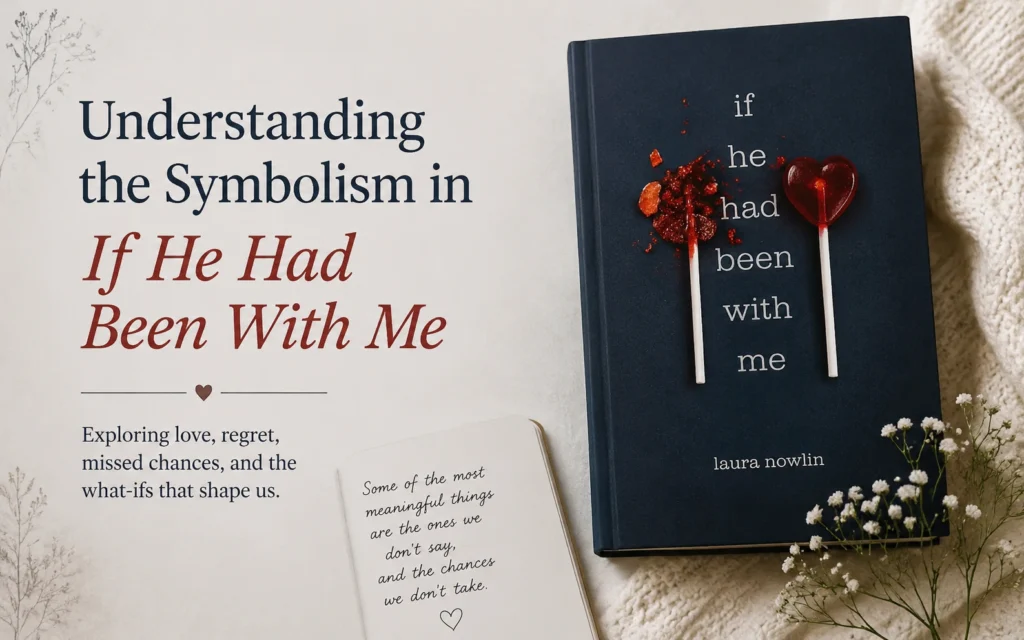

If you’re searching for the best quotes from *If Only I Had Told Her*, you’ll find them unforgettable because Finn’s first-person narration filters love, grief, and regret through deeply personal hindsight. Lines like “My love for her is the closest thing I have to religion” expose raw vulnerability, while unspoken devotion transforms silence into heartbreak. These quotes resonate because they capture universal longing with stunning craftsmanship. And there’s much more to uncover about why they linger long after the last page.
Why Finn’s Narration Makes Every *If Only I Had Told Her* Quote Unforgettable

Finn’s first-person narration transforms every quote in *If Only I Had Told Her* into something deeply personal, filtering grief, love, and regret through his own voice rather than an outside observer’s lens.
You’re hearing his private confessions, not external observations, which turns ordinary dialogue into something raw and immediate. His hindsight framing makes even brief lines feel loaded with missed chances, while the alternation between past and present sharpens emotional contrast.
Romantic quotes hit harder because he voices affection as an internal truth rather than a public declaration. Regret-driven lines carry irreversible weight because unspoken love isn’t a side theme. It’s the emotional core.
Grief-related quotes feel specific rather than generic because his voice anchors sorrow in personal detail. The tragic outcome you already know makes every remembered line resonate even more forcefully. His perspective also carries the quiet ache of a kind-hearted dreamer whose love for Autumn never found its full expression before his sudden death in a car accident.
Finn’s Most Heartbreaking Lines About Autumn

When you read Finn’s most heartbreaking lines about Autumn, two quotes stop you cold: “We weren’t touching, but it felt like the atoms between us were warm with my love for her,” and “My love for her is the closest thing I’ve to religion.”
Both lines expose a love so consuming it borders on the sacred, yet Finn never speaks it aloud until it’s too late.
That unspoken longing is exactly what makes these quotes hit hardest, because you feel the weight of everything Finn held back. As Friedrich Nietzsche once observed, “season of the soul” is a title that belongs to autumn far more than it does to nature itself.
Atoms Warm With Love
Some of Finn’s most heartbreaking lines about Autumn aren’t dramatic confessions. They’re quiet, almost invisible.
“We weren’t touching, but it felt like the atoms between us were warm with my love for her” captures that restraint exactly. You feel the distance between them, but you also feel how alive that distance is.
Finn uses scientific language: atoms, warmth, and physical space to describe something entirely emotional. That contrast is what makes the line so memorable.
He’s not reaching for her. He’s just standing close, loving her in silence, hoping the air between them is somehow enough.
It isn’t, of course. That’s the heartbreak. Finn’s feelings are real and unwavering, but they arrive too quietly, too late, and are never fully spoken. Love transcends seasons, remaining constant regardless of the distance or silence that stands between two people.
Love As Religion
That quiet, invisible love gets even harder to hold when Finn puts language to it directly.
“My love for her is the closest thing I have to religion.” That’s not a metaphor he throws out lightly.
He’s telling you that loving Autumn isn’t casual. It’s a belief system. It guides him, consumes him, and costs him something.
Here’s why that line hits so hard:
- It signals total devotion. Religion isn’t rational. Neither is what Finn feels.
- It exposes vulnerability. Sacred things can’t be defended. They’re just true to whoever holds them.
- It deepens the regret. When you pair that devotion with years of silence, the missed opportunity becomes unbearable.
That’s what makes this line the novel’s emotional center. Finn never acts on his feelings while Sylvie is away traveling in Europe, and that restraint makes his unspoken love all the more devastating.
Longing Left Unspoken
Finn never says “I love you” the way you’d expect: directly, cleanly, with the words landing where they’re aimed. Instead, he describes the air between them as warm with feeling, love, surviving without contact or confession.
That restraint is what makes his lines so difficult to read. When he says, “We weren’t touching, but it felt like the atoms between us were warm with my love for her,” you feel how much he’s been carrying without letting it out.
Longing isn’t just his emotional state. It’s the engine moving the story forward. Every line he doesn’t say to Autumn becomes a quiet accumulation of grief.
You understand, by the end, that the tragedy isn’t the absence of love. It’s the absence of timing. The novel is a companion to *If He Had Been With Me*, which has earned over 616,000 ratings on Goodreads, reflecting how deeply readers connected with this world before returning to it.
The Quotes That Capture Finn’s Unspoken Love for Autumn
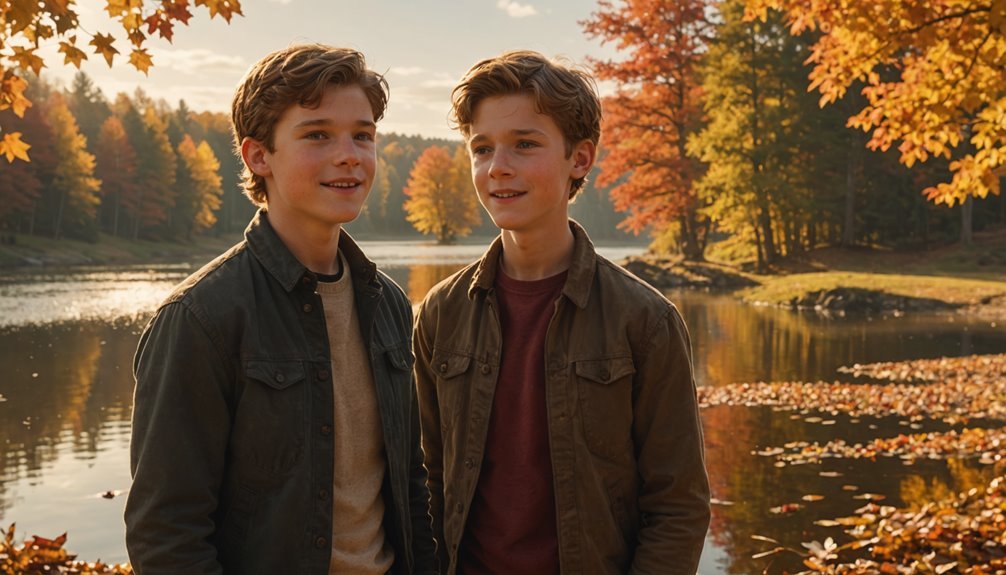
You don’t need Finn to say “I love you” out loud to feel the weight of what he carries.
When he observes that “the atoms between us were warm with my love for her,” he transforms physical proximity into a quiet confession that speaks louder than words.
His love isn’t announced. It radiates, constant and restrained, in every moment he chooses silence over declaration.
Warmth Through Unspoken Words
The standout quote captures this perfectly:
“We weren’t touching, but it felt like the atoms between us were warm with my love for her.”
Here’s why this line hits so hard:
- It replaces confession with sensation. You feel the love before he names it.
- “Atoms between us” suggests closeness without contact. Restrained yet undeniable.
- Warmth becomes the emotion itself. Present, private, and quietly aching.
Finn doesn’t say it. He doesn’t have to.
Love as Silent Devotion
Some of the most powerful moments in the novel don’t come from what Finn says. They come from what he doesn’t. When he observes, “We weren’t touching, but it felt like the atoms between us were warm with my love for her,” you feel devotion that needs no confession. It’s closeness expressed through atmosphere, not action.
That restraint deepens with his line, “My love for her is the closest thing I’ve got to religion.” He’s not declaring love out loud. He’s carrying it like a private conviction, steady and unshakeable.
Then Autumn offers rare acknowledgment: “You make me happier than any other person ever has.” It’s the moment his unspoken love finally receives recognition, quiet but meaningful, and it hits harder because neither of them ever made it loud.
The Lines Where Finn’s Love Becomes Something Like Religion
When you read through Finn’s best love lines, something shifts. The tone stops feeling like a teenage crush and starts feeling closer to devotion. His declarations carry vow-like weight, moral certainty, and a willingness to surrender rather than self-protect. That combination pushes his love language into almost sacred territory.
Three patterns make this comparison stick:
- Faith-like certainty. Finn speaks about love with conviction that doesn’t waver, even when the situation gets complicated.
- Sacrificial framing. His strongest lines treat love as something costly, chosen, and irrevocable.
- Reverence over preference. The beloved isn’t just wanted; they’re elevated, almost idealized into a calling.
These aren’t just memorable lines. They’re a moral framework disguised as romance.
Autumn’s Quotes That Show She Felt It Too
Autumn isn’t the quiet one in this story. Her quotes say otherwise. She wrote about letting go, about leaves that don’t fall but *fly*, about a world made beautiful by October. Those aren’t passive observations.
That’s someone processing something she can’t say out loud.
When she quotes Camus: *”Every leaf is a flower,”*, she’s not talking about the season. She’s talking about seeing beauty in things that are already leaving.
When she writes that autumn shows us how beautiful it is to let things go, you feel the weight behind it.
She felt it. She just wrapped it in metaphor, in crisp air and gold light, hoping someone would read between the lines.
You were supposed to be that someone.
Why These Lines Stay With You Long After the Last Page
The quotes from this story don’t fade because they were never just about October or falling leaves. They were about you. They hit harder because they’re built to last: emotionally, structurally, and thematically.
These words don’t fade because they were never just about a story. They were always about you.
Here’s why they stay:
- They carry emotional weight. Lines about grief, love, and regret are encoded more deeply in memory because the intensity makes them personally meaningful.
- They’re musically constructed. Rhythm, repetition, and balanced phrasing make them easier to rehearse mentally long after you’ve closed the book.
- They speak to universal truths. When a line captures loss or longing beyond any single story, it stops belonging to the page and starts belonging to your life.
That’s not an accident. That’s craft.
Conclusion
You’ve just finished the last page, and yet Finn and Autumn’s words won’t leave you alone. That’s the power of Laura Nowlin’s storytelling. It doesn’t let go. You’ll catch yourself rereading certain lines just to feel them again. These quotes don’t simply live in the book; they live in you now. And honestly? That’s exactly what the best love stories are supposed to do.
Frequently Asked Questions
Is *If Only I Had Told Her* a Standalone Novel or Part of a Series?
You’ll find *If Only I Had Told Her* works as a standalone novel, but it’s also a companion to *If He Had Been with Me*, making the two books a connected duology you can enjoy together.
What Age Group Is *If Only I Had Told Her* Recommended For?
You’ll find *If Only I Had Told Her* recommended for ages 14 to 18, aligning with grades 8 through 12. If you’re 13, you’d benefit from parental guidance due to the book’s intense, mature themes.
How Does *If Only I Had Told Her* Compare to *If He Had Been With Me*?
You’ll find that *If He Had Been With Me* focuses on anticipation and the buildup of tragedy, while *If Only I Had Told Her* shifts to grief, healing, and the aftermath, changing perspectives from Autumn’s alone to Finn’s, Jack’s, and Autumn’s combined.
Does the Novel Include Content Warnings for Sensitive or Heavy Themes?
Yes, the novel includes content warnings for sensitive themes. You’ll find warnings for death, depression, suicide, and pregnancy. Official platforms like Common Sense Media and StoryGraph actively flag these heavy themes for readers.
Where Can Readers Find the Full Text of *If Only I Had Told Her*?
You can borrow it digitally through OverDrive via the St. Lucie County Library System, purchase it at Barnes & Noble, or read Penguin Random House’s authorized excerpt for a free sample of the text.