

Angelina Smith is Finny’s mother in *The Mothers*, a single parent, art teacher, and quietly powerful force in the novel. She raises Finny alone after a brief affair leaves his father absent, yet she fills the void with emotional consistency, warmth, and a steady presence. Her resilience shapes Finny’s sense of identity and belonging in ways he doesn’t always recognize. Keep exploring, and you’ll uncover just how deeply she influences everyone around her.
Key Takeaways
- Angelina Smith is Finny’s mother, a resilient single parent who raises him alone after a brief affair leaves his father absent.
- She works as an art teacher at Finny and Autumn’s middle school, maintaining a warm, stable home that shapes Finny’s emotional development.
- Finny’s father sends expensive gifts but remains emotionally absent, a void Angelina fills through consistent presence and affirming guidance.
- Her close friendship with Autumn’s mother creates a sibling-like bond between the children while she supports her friend through depression.
- Angelina embodies solo caregiving, absorbing practical and emotional family responsibilities while modeling resilience built through necessity rather than privilege.
Who Is Angelina Smith?

If you’re writing about *The Mothers*, you’ll need additional sources to identify the correct character.
If your focus is *Mr. & Mrs. Smith*, redirecting your research toward Jane Smith and Jolie’s portrayal gives you a factually grounded starting point.
Angelina Smith is a freshman guard from Bolingbrook, Illinois, who chose DePaul University to pursue her basketball career and study Entrepreneurship.
Angelina Smith’s Role as Finny’s Mother

Angelina Smith wears two hats in *The Mothers*: she’s Finny’s mother and an art teacher at the middle school, both Finny and Autumn attend. She raises Finny alone after a brief affair leaves his father absent, and she doesn’t let that define her. Instead, she builds a stable, warm home that shapes Finny into the emotionally grounded person you see throughout the novel.
Her independence isn’t incidental it’s central to who she is. She refuses to be stopped by hardship or social judgment, modeling resilience through action rather than words. That environment matters for Finny’s identity, since the absence of his father is offset by the consistency and affection Angelina provides.
You also see her influence extend beyond her own household. Her close friendship with Autumn’s mother means Finny and Autumn grow up as near-siblings, and Angelina’s nurturing presence anchors both children’s early lives. She also steps up as a supportive figure for Autumn’s mother during her struggles with depression, demonstrating that her capacity for care reaches well beyond her role as a parent.
Finny’s Absent Father and the Gap Angelina Fills
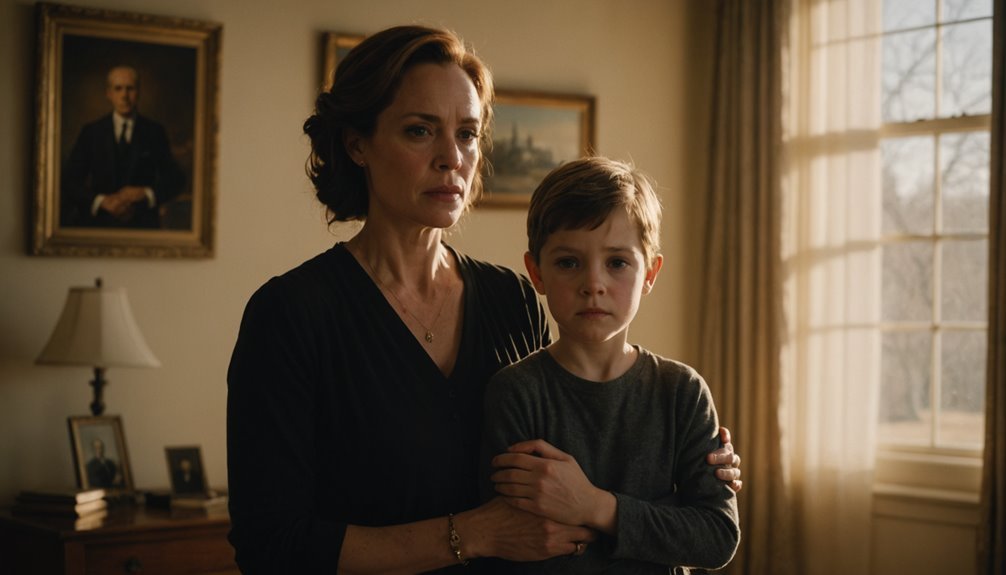
Finny’s father is present enough to write a check but absent enough to leave a wound. He sends expensive gifts instead of showing up emotionally, which creates a gap no material object can close.
Autumn recognizes this early — a boy without a real father craves origin and meaning, and Finny’s sensitivity around his own name reflects exactly that kind of hunger.
A boy without a father doesn’t just miss a man — he misses a mirror.
That void doesn’t stay empty. When paternal grounding is missing, other caregivers absorb the weight. Emotional dependency develops between Finny and the figures who actually show up consistently in his life.
Angelina steps into that space not by replacing Finny’s father but by offering what his father never does — consistent recognition, emotional presence, and real investment in who Finny is becoming. His need for validation gets redirected toward her because she’s actually there.
You can’t understand why Angelina matters so much without understanding what Finny’s father fails to provide. Her significance is inseparable from his absence.
How Angelina Smith Shapes Finny’s Emotional Security

What Angelina provides Finn isn’t complicated — it’s consistency. She’s a steady source of love, support, and guidance that grounds him when romantic stress pulls him off balance. That reliability creates safety — something Finn desperately needs given his insecurity and need for external validation.
Her presence doesn’t just comfort him; it actively reduces his dependence on romantic relationships for emotional fulfillment. When you’re anchored at home, you don’t fall apart as easily elsewhere.
| Angelina’s Role | Finn’s Need | Resulting Benefit |
|---|---|---|
| Emotional consistency | Sense of safety | Reduced anxiety |
| Affirming guidance | Self-worth reinforcement | Stronger self-regulation |
| Dependable presence | Belonging and comfort | Less romantic overreliance |
Angelina also interrupts Finn’s tendency toward unhealthy idealization by offering a grounded perspective during emotional confusion. She’s not just a caregiver she’s the counterweight to his instability, modeling sustaining love that gradually shapes his emotional resilience. This foundation becomes all the more poignant when viewed against Finn’s tragic death in a car accident, which cuts short the very emotional growth she helped nurture.
What Angelina Smith Reveals About Caregiving and Absent Fathers
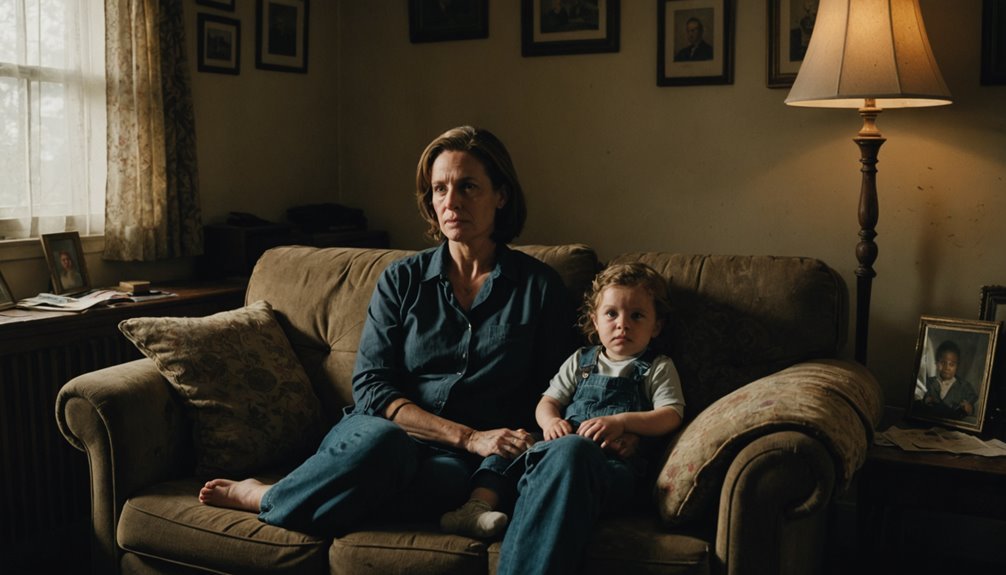
Her role as emotional anchor doesn’t stop at Finn’s development — it also tells us something broader about what caregiving looks like when a father isn’t in the picture. When paternal support is absent, caregiving labor concentrates on whoever’s left. For Angelina, that means absorbing the practical, emotional, and organizational weight of family life alone.
You see this pattern clearly in how she operates. She’s not just a mother — she’s an advocate, coordinator, and stabilizing force. Research on caregiver dynamics confirms that absent fathers shift unequal labor onto the available parent, and Angelina embodies that reality without complaint.
Angelina isn’t just a mother — she’s an advocate, coordinator, and stabilizing force carrying the full weight alone.
What makes her portrayal meaningful is that her reliability *becomes* the structure Finn depends on. She doesn’t build consistency because conditions are ideal; she builds it because necessity demands it.
That’s what caregiving under absent-father dynamics actually looks like: resilience formed through pressure, not privilege. Caregivers in these circumstances often benefit from accepting help from others to prevent the isolation that comes when the full burden of care rests on a single person.
Conclusion
You’ve now seen how Angelina Smith isn’t just background detail in *The Mothers*—she’s an essential force shaping Finny’s emotional world. Her presence fills the silence left by an absent father, demonstrating how caregiving transcends traditional roles. As you analyze her character, you’ll recognize that she embodies resilience and unconditional support. She’s proof that a single devoted parent can anchor a child’s entire sense of self.
Frequently Asked Questions
Does Angelina Smith Ever Appear in Scenes With Autumn’s Mother?
You won’t find any confirmed scenes featuring Angelina Smith alongside Autumn’s mother. Available sources don’t support a verified on-screen appearance together, so you’d need episode transcripts or recaps for definitive confirmation.
How Does Angelina Smith Respond to Finny’s Romantic Relationship With Autumn?
You’ll find that Angelina responds to Finny’s romance with Autumn supportively, recognizing their deep, long-standing bond. She doesn’t oppose or interfere but instead serves as a steady, accepting presence who understands the relationship’s genuine emotional roots.
Does Angelina Smith Ever Confront or Mention Finny’s Absent Father Directly?
You won’t find Angelina directly confronting or mentioning Finny’s absent father in the novel’s available text. His absence functions as quiet background context, shaping the emotional atmosphere without triggering any explicit verbal reckoning from Angelina.
How Does Angelina Smith’s Parenting Style Differ From Other Mothers in the Novel?
You’ll find Angelina’s style favors independence and open dialogue over strict control. She trusts her children to self-direct, contrasting sharply with authoritarian mothers who enforce rigid rules, fixed routines, and discipline-driven obedience throughout the novel.
Does Angelina Smith Play Any Role in the Novel’s Climactic Events?
You’ll find that Angelina Smith doesn’t play a direct role in the novel’s climactic events. She functions within the aftermath, processing grief through memory and reflection rather than driving or influencing the central tragedy itself.