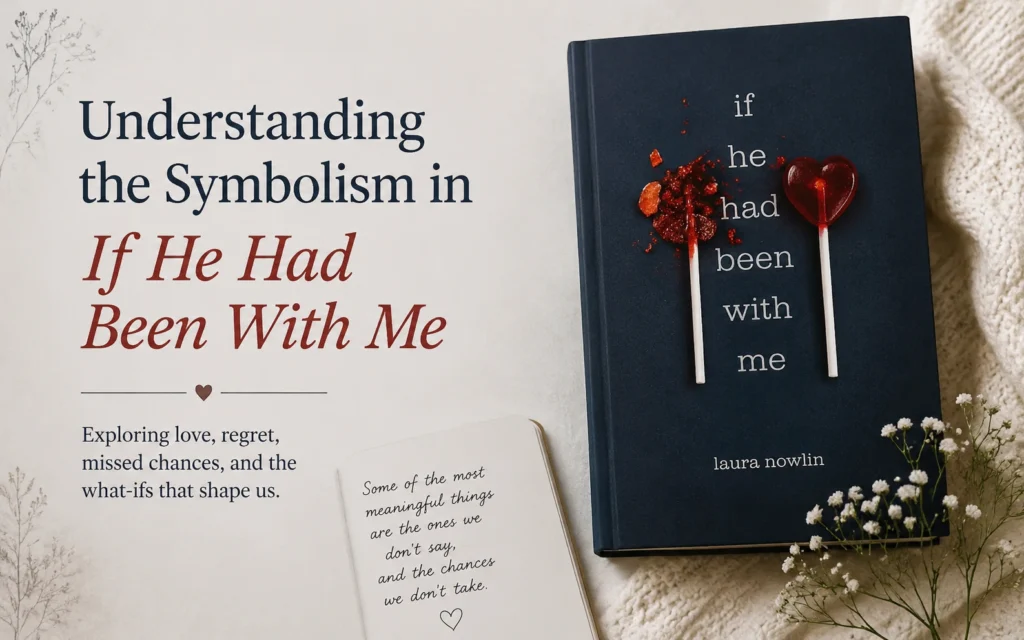

The best *If He Had Been With Me* book club questions don’t just recap the plot they crack open the silences. Ask why Autumn and Finn drift apart instead of fighting for each other. Ask whether silence protects them or costs them everything. Push into Autumn’s identity erosion, Finn’s ambiguous regret, and Jamie’s role as catalyst. The questions that hit hardest are the ones your group can’t easily answer. Keep going, and you’ll find twenty that guarantee a conversation nobody wants to end.
Key Takeaways
- Autumn and Finn’s gradual emotional drift, driven by silence and missed signals, offers rich discussion about how relationships erode without dramatic conflict.
- The novel raises questions about identity erosion, exploring how small compromises and self-silencing reshape Autumn’s sense of self over time.
- Silence functions as the story’s central tragedy, prompting discussion on whether speaking earlier could have changed the outcome entirely.
- Regret is portrayed asymmetrically, with Autumn’s grief being explicit while Finn’s remains implied, inviting debate about emotional imbalance in relationships.
- The tension between fate and choice encourages readers to examine whether the ending results from unavoidable circumstances or years of avoidance.
Why Autumn and Finn Drift Apart in *If He Had Been With Me

One of the novel’s most quietly devastating threads is how Autumn and Finn don’t fall apart dramatically; they simply drift. By high school, they’ve settled into separate social circles, and that distance makes ordinary conversation feel unnatural.
There’s no single breaking point, just a slow accumulation of missed moments and misread signals.
You’ll notice how unspoken feelings make everything heavier. Autumn’s hidden love for Finn shapes the tension throughout, yet neither character names what’s quietly shifting between them.
Emotional restraint does real damage here.
Their separate romantic relationships, Autumn with Jamie, Finn with Sylvie, push the original bond further into the background, complicating any honest reconnection.
Meanwhile, adolescence pulls them in entirely different directions. They’re growing up, but not together.
The novel frames all of this as emotionally realistic, which is exactly what makes it sting. You’re watching two people lose each other not through conflict, but through silence and bad timing. The story’s emotional weight is only deepened by its senior year reunion, when renewed closeness between Autumn and Finn makes the tragedy that follows feel all the more cruel.
What Finn’s Popularity Actually Does to Their Friendship

Silence and slow distance explain part of why Autumn and Finn lose each other, but Finn’s growing popularity adds a structural layer that makes reconnection even harder. Once he joins the soccer team and moves into a more visible social world, their casual daily contact disappears.
Different peer groups replace the routines that once kept them close, and new friendships form around those separate circles. Dating within those circles adds another layer, pushing them further apart.
Separate social circles replace shared routines, and dating within those circles quietly widens the distance between them.
What makes this harder to watch is how popularity reshapes behavior in private, not just in public. Social standing encourages restraint, so unspoken feelings stay unspoken.
Shared history doesn’t disappear, but public roles limit honest conversation. The friendship survives in fragments, but emotional closeness continues to weaken. Finn’s relationship with Sylvie Whitehouse creates an additional emotional barrier, making honest communication between him and Autumn increasingly out of reach.
Autumn’s Identity Doesn’t Break : It Quietly Erodes

Autumn doesn’t wake up one day and find herself lost—she slowly stops speaking her truth, swallows her feelings for Finny, and lets silence replace honesty until self-expression feels foreign.
Notice how her sense of belonging shifts as Finny drifts toward popularity, because fitting into one world means quietly surrendering the version of herself that felt natural in another.
The losses she suffers aren’t dramatic or visible, but each unspoken word and missed connection chips away at a coherent sense of who she actually is. Set against the backdrop of suburban Ferguson, Missouri, the familiar environment makes her quiet unraveling feel all the more grounded and real.
Self-Silence Over Time
Throughout *If He Had Been With Me*, what slowly undoes Autumn isn’t a single rupture; it’s the accumulated weight of everything she doesn’t say. Each suppressed thought, hidden preference, and swallowed disagreement doesn’t disappear it compounds.
That’s what makes self-silencing so insidious: it doesn’t announce itself. It works quietly, replacing authentic response with automatic accommodation until the silence starts to feel like personality rather than fear.
As you discuss Autumn’s arc, consider when her silence shifts from a conscious choice to an invisible reflex. Ask what fears or rewards keep it in place.
Notice how her identity doesn’t shatter; it narrows. She remains functional, even relatable, while becoming less defined internally. That slow disappearance is the novel’s most unsettling and honest emotional truth. Research shows that this kind of chronic self-silencing is directly linked to elevated rates of depression, as the ongoing suppression of authentic needs quietly erodes both mental health and self-worth.
Belonging Reshapes Autumn
Belonging doesn’t break Autumn it quietly reshapes her, one small accommodation at a time. You watch her identity shift through gradual adaptation rather than a single dramatic break. Each compromise feels small. Each adjustment seems reasonable. But cumulatively, they hollow her out.
When rejection feels unsafe, she organizes her life around maintaining acceptance rather than expressing who she actually is. Her choices start drifting toward what others expect rather than what she values.
You’ll notice she struggles to name her preferences without first referencing someone else’s context.
That’s the warning sign worth discussing with your group: belonging has replaced her internal reference points. Her identity doesn’t shatter it erodes quietly, in ways that are easy to miss until the disconnection becomes impossible to ignore. Holding onto outdated versions of herself consumes the energy she needs to let go and flourish.
Invisible Losses Accumulate
Erosion is harder to grieve than rupture. Autumn doesn’t lose herself in one defining moment. She loses herself through small concessions, a withdrawn opinion, a narrowed interest, a softened reaction, until the person she was feels distant and unfamiliar.
Each compromise seems manageable on its own, but they accumulate, quietly weakening her self-coherence without producing a clear break to mourn.
That ambiguity makes grieving harder. Because no single loss announces itself, the grief stays diffuse and unnamed. She keeps functioning outwardly while dislocation builds inward, and external appearances mask the depletion underneath.
Ask your group: which small concessions do you notice Autumn making? At what point does accommodation become erosion? And does she ever recognize what she’s losing before it’s already gone?
Does Jamie Help or Hurt Autumn’s Emotional Growth?

Jamie’s role in Autumn’s emotional growth is complicated; he both damages and, indirectly, develops her. Directly, he hurts her. His controlling behavior around career, drinking, and sex limits her autonomy before she’s ready. His push toward marriage outpaces her emotional maturity, and his betrayal with Sasha destroys whatever stability the relationship held.
Yet indirectly, Jamie clarifies what Autumn actually values. The mismatch between what she expected from romance and what Jamie delivers forces her to compare him with Finny, and that comparison sharpens everything. She begins recognizing the difference between attachment and genuine love, between pressure and care.
You might ask your group: does Autumn grow *because* of Jamie, or simply *despite* him? The evidence leans toward the latter. Jamie functions less as a healthy partner and more as a catalyst one who exposes her emotional limits while painfully pushing her toward clearer self-understanding.
The Book Club Questions That Hit Hardest in Discussion

Some book club questions cut straight to the heart of *If He Had Been With Me*, eliciting raw emotional responses that make the discussion feel personal and urgent.
Others land differently, sparking genuine disagreement about Autumn’s choices, Jamie’s role, and what the ending actually means.
Knowing which questions do which work helps your group get the most out of the conversation.
Questions That Provoke Emotion
Ask your group whether Autumn and Finn’s distance was a choice or a consequence, and you’ll feel the room shift.
Push further by asking whether their silence protected them or cost them everything.
When you reach the ending, don’t soften it, ask how the loss changes the meaning of every earlier moment.
These questions work because they don’t let readers escape into the theme. They make the story personal, pulling regret, grief, and missed timing directly into the conversation.
Questions That Spark Debate
The questions that cut deepest in book club aren’t the ones everyone agrees on, they’re the ones that split the room.
Ask who bears the most responsibility for the tragedy, and you’ll immediately hear competing answers. Some members will argue that Autumn’s silence is as damaging as any active choice. Others will insist that circumstances and immaturity reduce individual blame.
Push further by asking whether the ending feels morally fair, or whether romantic attachment distorted judgment in ways the novel frames too sympathetically.
Question whether the book earns the reader’s sympathy or manipulates it. These aren’t questions with clean answers, and that’s exactly the point.
When your group disagrees sharply, you’re engaging with what the novel actually asks you to wrestle with not just what happened, but whether it had to.
How Foreshadowing Builds Dread From the First Pages
Consider asking your group: which early detail first made you uneasy, and did rereading those passages change how you understood the novel’s emotional architecture?
The One Missed Conversation That Changes Everything
Foreshadowing sets the mood, but the missed conversation is where the novel’s emotional stakes become undeniable. Autumn and Finn’s relationship doesn’t collapse from one dramatic fight—it erodes through accumulated silence and delayed honesty.
| Moment | What Was Left Unsaid | What It Cost |
|---|---|---|
| Drifting apart in high school | Autumn’s unspoken feelings for Finn | Lost closeness and shared direction |
| Finn’s growing popularity | No acknowledgment of emotional distance | A widening gap neither named |
| Autumn’s relationship with Jamie | Unresolved feelings for Finn remain buried | Emotional dishonesty toward everyone |
| Occasional reconnections | Neither character speaks plainly | False hope replaces real resolution |
| The August tragedy | The conversation that never happened | The relationship’s unrealized potential |
Consider these discussion questions:
- Does silence protect Autumn or deepen her regret?
- Which missed moment carries the most weight?
- Could one honest conversation have changed the ending?
The novel argues that timing isn’t just important it’s irreversible.
Is the Tragic Ending in *If He Had Been With Me* Fate or Choice?
When you look at the foreshadowing woven through *If He Had Been With Me*, you start to see how the novel frames the ending as both inevitable and avoidable at once.
The choices Autumn and Finny make, from staying silent to drifting into separate social worlds, build a chain of consequences that shapes how hard the loss hits.
Ask your book club whether they see the tragedy as something fate delivered or something the characters quietly constructed through years of inaction and missed moments.
Foreshadowing and Narrative Fate
| Narrative Element | Fatalistic Function |
|---|---|
| Title framing | Centers the story on an alternate, lost timeline |
| Retrospective narration | Discloses loss before it occurs |
| Recurring silence and timing | Operates as structural inevitability |
| Storm-related accident | Delivers fate through external circumstance |
You’re never reading toward an unknown outcome — you’re reading through one. The foreshadowing doesn’t just hint at tragedy; it builds the architecture that makes heartbreak feel designed rather than accidental.
Choices That Altered Outcomes
The fatalistic architecture built through foreshadowing raises an uncomfortable question: if the ending feels designed, does that mean the characters never had a chance?
The novel resists that conclusion. While the car accident sits outside anyone’s control, the emotional devastation builds from choices both characters actively made.
Autumn’s years of silence, Finn and Sylvie’s presence as emotional buffers, and countless avoided conversations all compound into consequence.
The tragedy doesn’t arrive suddenly, it lands on ground that has already been prepared.
Ask your group whether the accident changes anything or simply closes a story already shaped by avoidance.
Would an earlier confession have altered the outcome, or only its meaning?
The novel suggests that fate handles the ending, but the characters wrote everything leading up to it.
Regret Versus Inevitability
Ask your group to reflect on:
- Does Autumn’s hesitation between Finn and Adam make the tragedy feel earned or avoidable?
- Does the childhood-to-high-school distance feel structurally inevitable or like a series of small, reversible choices?
- Is the grief more painful because silence was chosen repeatedly, or because the outcome was always coming?
- Does mourning “every moment not taken” suggest regret over fate?
The book refuses comfort, which keeps both readings alive. Your group doesn’t need to choose one answer; the tension between fate and choice *is* the discussion.
How Fitting In Slowly Costs Autumn Who She Actually Is
You’ll notice how her interactions shift between what she genuinely feels and what seems acceptable to those around her. She monitors, adjusts, and softens.
The novel frames belonging as something negotiated through imitation and restraint rather than through open self-expression—and that distinction carries real weight.
Ask your group: at what point does fitting in stop being adaptation and start being erasure?
Autumn’s story suggests that the costliest compromises aren’t dramatic, they’re quiet, gradual, and easy to miss until she’s already lost something essential.
Why What Nobody Says Hurts More Than What They Do
Silence, in *If He Had Been With Me*, does more damage than any argument ever could. When no one says anything, you fill the void with your worst assumptions. That quiet becomes a wound that your brain processes the same way it handles physical pain.
Consider what silence actually does:
- It triggers rumination, keeping your focus locked on the missing explanation.
- It reads as intentional withdrawal, which makes the rejection feel personal and purposeful.
- It pushes you to look for fault within rather than without.
- It outlasts spoken cruelty because ambiguity never fully resolves.
Autumn experiences this throughout the novel. The things Finny doesn’t say, the distance nobody addresses, the feelings everyone avoids they accumulate.
Direct conflict at least gives you something concrete to process. Silence leaves you carrying damage with no clear source, which makes healing remarkably harder and the pain remarkably longer.
What the Unspoken Love Between Autumn and Finn Actually Costs Them
You watch Autumn and Finn circle each other for years, carrying feelings neither one names until time runs out.
Their silence doesn’t protect them it costs them the relationship they could’ve had, the clarity they deserved, and ultimately the chance to say what mattered most.
Ask your group: what does their unspoken love actually take from each of them, and could honesty have changed the outcome?
Silence Between Them
What Autumn and Finn never say to each other ends up costing them everything. Their silence doesn’t protect them it traps them in prolonged uncertainty while genuine feelings stay buried beneath avoidance.
Consider what their unspoken love actually produces:
- Ordinary interactions become emotionally loaded because years of avoidance make every encounter feel consequential.
- The relationship between friendship and romance stagnates, never fully becoming either.
- Repetitive “what if” thinking deepens exhaustion, since internalized feelings find no relief through honest confession.
- Finn’s death makes the withheld truth irreversible, transforming silence into permanent loss.
You’ll want your group to wrestle with how silence preserves appearances while quietly eroding emotional truth. The relationship exists fully in feeling but only partially in action, and that gap destroys everything.
Missed Connection Costs
Autumn and Finn’s unspoken love doesn’t just create romantic frustration; it accumulates real costs across every dimension of their lives.
Emotionally, prolonged silence transforms early closeness into ongoing uncertainty about what the relationship could’ve become.
Socially, their choice to ignore each other turns a private bond into a visible separation, hardening the divide before honest communication can happen.
Narratively, the unspoken attachment becomes the engine of the plot itself silence carries the story’s weight because neither character translates emotional significance into action.
Relationally, missed timing prevents them from ever testing whether their connection could survive real commitment or conflict.
Ask your book club: which cost feels most irreversible to you? Is it the emotional drift, the social distance, or the permanent alteration caused by waiting too long?
Love Left Unsaid
Silence has a cost, and in *If He Had Been With Me*, that cost is never abstract—it’s measured in grief, regret, and a future that can’t be undone.
Autumn and Finn never say what they feel, and that restraint shapes everything that follows. As you discuss this with your group, consider:
- How does Finn’s unspoken love transform into something Autumn must mourn rather than remember?
- Why does Autumn’s silence become part of her emotional damage rather than just a missed moment?
- How does the pregnancy connect love left unsaid to a future built after loss?
- Does the novel suggest that speaking sooner would’ve changed the outcome?
You’ll find the story’s real tragedy lives inside everything that was never said.
Which Character Decision in *If He Had Been With Me* Feels Most True?
Hesitation, not drama, drives the most believable decisions in *If He Had Been With Me*.
Consider which choice feels most honest to you: Autumn staying silent, Adam waiting patiently, or Autumn drifting toward Finn to avoid emotional risk.
Autumn’s silence feels especially true because she’s introspective and guarded.
Autumn’s silence rings true she’s reflective, self-protective, and far too aware of what speaking honestly might cost her.
She doesn’t stay quiet out of indifference, she stays quiet out of fear. That’s a feeling most readers recognize immediately.
Adam’s patience also holds up under scrutiny.
He’s not waiting strategically; he’s afraid of losing a friendship he values more than he can explain. His restraint isn’t passive—it’s protective.
What makes these decisions land is that none of them are made dramatically.
They’re made quietly, gradually, through small avoidances and missed moments.
Ask your group: which character’s hesitation felt most familiar?
The answer might reveal more about your own experiences than the novel itself.
What Changes If Autumn Speaks First?
Autumn’s withheld truth is the novel’s quiet engine, and asking what happens if she speaks first forces you to rethink everything that the silence has built.
If her first words come early, the story trades prolonged ambiguity for the sharper consequences of courage, and the relationship moves from implied possibility to defined choice.
You’re left weighing whether silence or vulnerability shapes a more honest portrait of adolescent love and loss.
Autumn’s Withheld Truth
One of the novel’s most haunting questions is whether the tragedy is due to circumstances or to Autumn’s choice to stay quiet. Consider what shifts if she speaks first:
- The “lost opportunity” theme loses its grip, replacing long-delayed longing with immediate confrontation.
- Sylvie’s role intensifies earlier, forcing loyalty and jealousy into sharper conflict.
- Regret fades as a dominant emotion, since silence no longer drives the missed connection.
- Autumn’s agency becomes undeniable, moving her from reactive to deliberate.
You can ask your group how much the novel’s heartbreak depends specifically on Autumn’s silence rather than outside forces. If she confesses early, does the story still earn its grief? That question cuts to the book’s emotional core.
First Words, New Path
What Autumn says first matters because the novel opens with Finny already dead. That structure locks the story into retrospective grief before a single friendship scene plays out. If Autumn speaks first instead, you shift the entire emotional frame from inevitability to possibility. The tension becomes interpersonal rather than elegiac.
Consider what that opening line would signal: Autumn initiates contact before loss closes in, before silence accumulates, before the story’s pattern of missed connection takes hold. You’d see her agency before circumstances define her. You’d also read Finny as a present participant rather than an idealized memory.
Ask your group this: if Autumn speaks first, does the novel’s central grief hit harder or softer, and does she feel more or less responsible for what goes unsaid?
Silence Versus Courage
Shifting Autumn’s opening line changes more than tone; it changes the entire moral architecture of the story. When you consider what silence actually costs her, the novel’s tragedy sharpens considerably.
Here’s what speaking first would restructure:
- Prolonged uncertainty collapses into earlier clarity about mutual feelings.
- Misunderstandings fueling separate relationships lose their foundation.
- The regret-driven plot loses its central emotional weight.
- The story shifts from “what was left unsaid” to the consequences of direct action.
Silence isn’t passive here, it’s an active choice with accumulating consequences. Autumn’s introspective nature makes avoidance feel protective, but the novel frames that protection as self-deception.
Courage doesn’t require dramatic heroism; it requires honest speech under emotionally risky conditions. The real question your group should wrestle with: Does timing matter more than truth?
How August Becomes the Point Everything Breaks Apart
August doesn’t arrive quietly in *If He Had Been With Me* it arrives as the month where denial finally runs out of room.
What felt like manageable tension hardens into something structural, and the small cracks you’ve been tracking throughout the novel suddenly look like damage that can’t be undone.
Think about what August represents beyond a calendar month. It carries associations of exhaustion, completion, and the pressure of unresolved issues.
In the novel, it functions as a threshold the point where false stability ends and emotional clarity becomes unavoidable.
Use these questions to guide your discussion:
- Which details signal that the relationship is already breaking before the final rupture?
- How does August shift the emotional tone from uncertainty to collapse?
- Why does the symbolism of completion and renewal deepen the weight of this particular ending?
- What makes August feel like the moment of no return?
What Regret Looks Like for Autumn Versus Finn
Once the collapse arrives, what lingers isn’t just the wreckage, it’s the question of who carries it and how.
Autumn’s regret is active, visible, and cumulative. Finn’s is more quietly expressed through tension and action rather than narration.
Consider how their regret differs across four key dimensions:
- Visibility – Autumn’s regret is clearly stated; Finn’s is implied through behavior.
- Intensity – Autumn’s grows heavier with daily proximity, while Finn’s remains harder to measure.
- Emotional texture – Autumn carries anger, betrayal, love, and loneliness simultaneously.
- Expression – Autumn reflects inward; Finn’s feelings surface through unresolved interactions.
You’ll notice the novel never equalizes their grief. That imbalance is intentional.
Ask your group: does Finn actually regret the split, or does Autumn project that onto him? The answer shapes how you read every scene they share.
What the Side Characters Reveal About Autumn’s Real Feelings
Jamie exposes her avoidance. She can picture a future with him, but her emotional center stays tied to Finny. His controlling behavior also shows she struggles to recognize relationship warning signs, which tells you more about her internal uncertainty than any confession would.
Angelina offers the nurturing consistency Autumn gravitates toward during crisis. Her open care makes Autumn’s withdrawal more visible by contrast.
Her social circle marks the distance between who she was and who she’s becoming the loss of easy connection, the search for belonging, the drift from Finny.
Ask your group: what does Autumn’s pattern of attachment choosing comfort over clarity reveal about what she actually feels but refuses to say?
For Autumn and Finn, Is Love a Timing Problem or a Feeling Problem?
When you look at Autumn and Finn’s relationship, the easiest explanation is bad timing—but that answer lets the harder question off the hook.
Timing and feeling aren’t competing explanations; they’re layered ones. Ask your group to separate them carefully.
Consider what’s actually blocking the relationship:
- Life stage misalignment — Are their long-term goals, readiness levels, or circumstances pulling them in different directions?
- Emotional intensity without practical alignment — Does strong feeling actually translate into a workable partnership?
- Readiness versus avoidance — Is “bad timing” a genuine obstacle or a way to sidestep commitment?
- Persistence versus compatibility — Does love surviving distance or delay mean it’s enough to build on?
The novel’s tension works because both problems exist simultaneously. Affection is real, but affection alone doesn’t resolve logistics, maturity gaps, or mismatched futures.
Push your group to name which barrier carries more weight.
What If He Had Been With Me That Night?
The title of the novel is the question, and your book club should sit with it seriously before moving on. That single “what if” reframes every scene you’ve already read, asking whether one different choice could have prevented everything that follows.
Finn is nineteen when the crash happens. He’s with Sylvie, not Autumn. The accident closes every possible future the two of them hadn’t yet chosen to pursue.
What makes this devastating isn’t just the loss, it’s how ordinary the timing was.
Ask your group: Does the alternate timeline feel like a rescue or just a delay? Would being together that night have changed anything permanent, or only postponed the same patterns of silence and distance?
The novel suggests that one night can redirect an entire life. Your discussion gets sharper when you decide whether the tragedy lives in the crash itself or in everything that happened before it.
Secondary Characters as Mirrors for Autumn’s Inner Conflict
- How does Sasha’s openness about boys and relationships highlight Autumn’s emotional guardedness?
- What does Angelina’s steadiness reveal about Autumn’s inability to process grief and uncertainty?
- In what ways does Jamie’s controlling behavior clarify what Autumn actually wants versus what she settles for?
- How does Finny’s emotional constancy make Autumn’s internal hesitation more visible to you as a reader?
Together, these characters form a kind of mirror network.
Autumn can’t see herself clearly until you examine who surrounds her and what each relationship quietly demands she confront.
Why ‘What If’ Is the Question *If He Had Been With Me* Never Resolves
Autumn and Finn’s relationship exists in the gap between what happened and what could have. Their childhood closeness fractures, high school pulls them apart, and every missed opportunity hardens into something irreversible.
You can trace the choices, but you can’t rewrite them. That’s the point.
The novel’s fatalism depends on hindsight. A different decision might’ve changed everything, but only in retrospect does that feel unbearable.
Grief, missed timing, and irreversible consequences work together to keep the “what if” permanently open.
When your book club asks whether Autumn and Finn might’ve had a different ending, you’re not solving a mystery you’re feeling exactly what the novel wants you to feel.
Conclusion
You’ve just scratched the surface of what this novel can spark in a group setting. These *If He Had Been With Me* book club questions aren’t meant to give you clean answers, they’re meant to make you sit with the discomfort. Bring them to your next meeting, let the conversation get messy, and don’t rush toward resolution. The best discussions, like the best stories, leave you thinking long after the last page.
Frequently Asked Questions
How Old Are Autumn and Finn When Their Friendship First Begins?
You’ll find that Autumn and Finn’s friendship begins at birth. The novel doesn’t specify an exact age—they’ve simply been best friends since they were babies, growing up as neighbors with mothers who are also close friends.
Is *If He Had Been With Me* Part of a Series or Standalone Novel?
You’ll find *If He Had Been With Me* is generally a standalone novel, though some catalogs list it as Book 1. Its self-contained story arc means you don’t need any other books to enjoy it fully.
What Grade Level or Age Group Is *If He Had Been With Me* Written For?
You’ll find *If He Had Been With Me* written for young adult readers, specifically ages 14–18. It’s best suited for high schoolers who enjoy emotionally heavy romance, grief, and coming-of-age themes.
How Long Does It Typically Take a Book Club to Finish This Novel?
You’ll typically finish *If He Had Been With Me* in 3 to 4 weeks as a book club. Its slow-burning, discussion-heavy story often extends your timeline beyond what the page count alone suggests.
Are There Any Content Warnings Readers Should Be Aware Of Before Starting?
Yes, you’ll want to know this book contains sexual content, teen pregnancy, suicide, mental health themes, and death. It’s emotionally heavy, so prepare yourself for grief-driven, tragic subject matter before diving in.