

When you explore *If He Had Been With Me*, you’ll find the story set primarily in Pineville, a small suburban town rooted in tight-knit community life and familiar streets. Ferguson appears as a separately referenced location, likely a fictionalized name, adding narrative depth to the same suburban world. Both names reflect the story’s grounded, small-town atmosphere. Neither is wrong they simply represent different layers of the same setting, and there’s plenty more to uncover.
Key Takeaways
- The novel is primarily set in Pineville, a small suburban town between Charlotte and Fort Mill, South Carolina, with a historic downtown.
- Ferguson appears in the text as a small suburb of St. Louis, creating a discrepancy with Pineville referenced in most summaries.
- Both Pineville and Ferguson describe similar tight-knit suburban environments, and the naming difference likely stems from adaptation or fictional adjustments.
- Ferguson likely functions as a fictionalized setting name, while Pineville’s real geography grounds the story’s Southern suburban atmosphere.
- The small-town setting, whether Pineville or Ferguson, amplifies emotional stakes by limiting privacy and intensifying characters’ relationships and experiences.
Where Is *If He Had Been With Me* Actually Set?

If you’ve ever tried to pin down the exact setting of *If He Had Been With Me*, you’ve likely run into two different answers: Pineville and Ferguson.
Both names refer to the same type of place, a small, tight-knit suburban town, but they appear in different sources.
Most public summaries and book reviews identify Pineville as the setting, placing Autumn’s entire high school experience there.
Most public summaries and book reviews place Autumn’s entire high school experience in Pineville.
But if you’ve read the actual text, you’ve seen Ferguson referenced as a small suburb of St. Louis featuring Victorian houses, old brick churches, and a historic downtown tied to childhood memories.
This discrepancy likely reflects either a difference in adaptation or an internal naming inconsistency.
Neither source is wrong exactly, but they’re not identical either.
The safest way to describe the setting is a small-town, Missouri-like suburban environment where long-term familiarity and neighborhood closeness drive the entire story. The tight-knit community atmosphere directly mirrors the novel’s focus on unrequited love and loss, in which characters are constantly shaped by their shared history and closeness to one another.
What Makes Pineville the Right Backdrop for This Story?
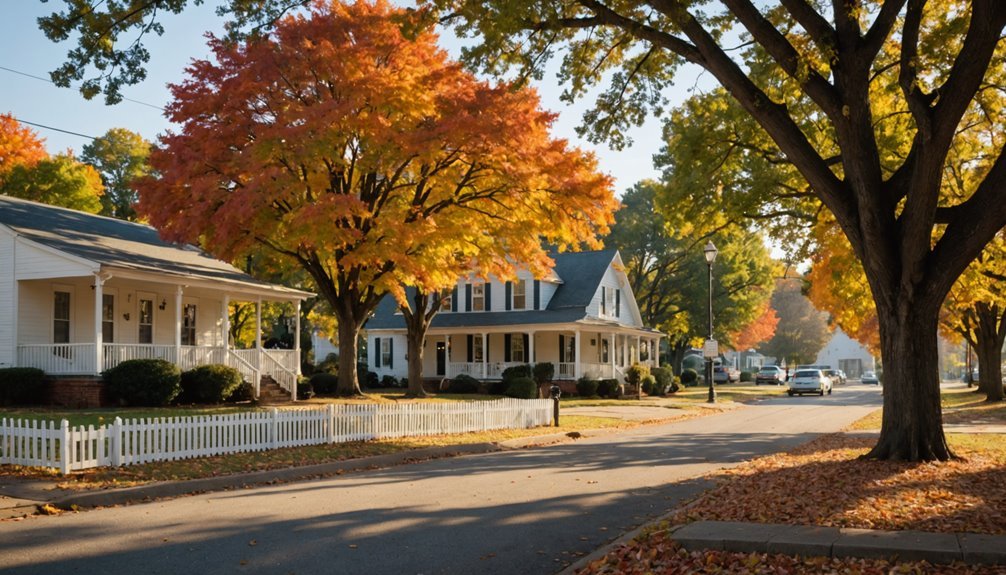
Pineville also sits between Charlotte and Fort Mill, South Carolina, which means it carries that specific tension between staying and leaving. You feel the pull of a larger world without ever fully escaping the one you grew up in.
That’s exactly the pressure coming-of-age fiction needs.
Then there’s the historic downtown along Main and Dover Streets, where brick storefronts and walkable blocks create a sense of continuity. James K. Polk, the 11th President of the United States, was born here in 1795, grounding the town in a history that extends far beyond its quiet streets.
The town has been building itself since 1873. That kind of layered history makes personal events feel heavier, like they’re happening inside something much older than you.
Does the Setting Mirror Real-World North Carolina?
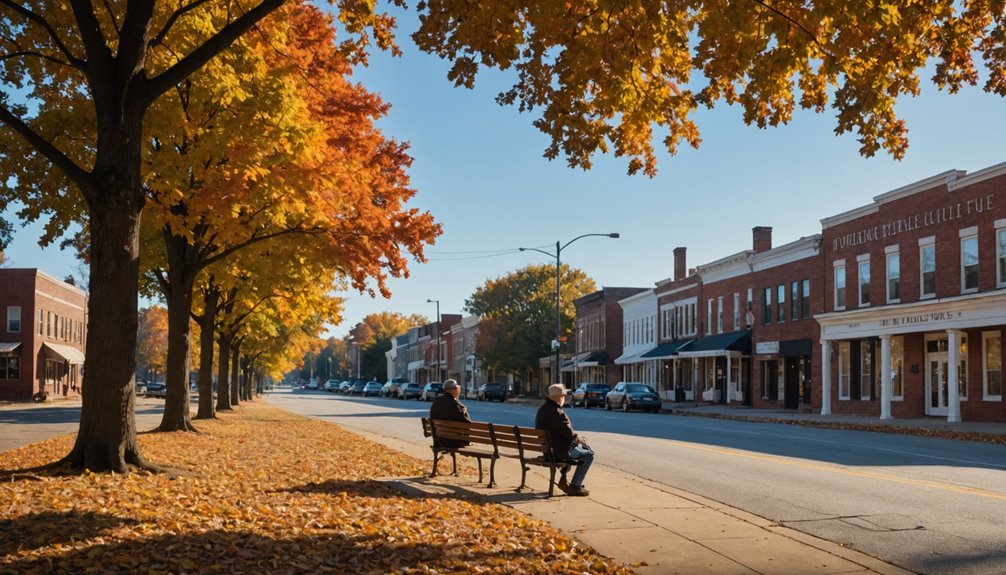
When you look at the geography, the story’s setting closely matches a real North Carolina town. Pineville sits just south of Charlotte in Mecklenburg County, and that location alone grounds the story in a recognizable suburban Southern reality.
You get the sense of a place that’s neither fully rural nor fully urban just the kind of fringe-suburban town where everyday drama feels believable.
Here’s what makes the setting feel authentically North Carolina:
- Pineville contains a documented historic mill village with older frame housing
- It sits within fast-growing Mecklenburg County, reflecting real suburban patterns
- Strip commercial development and light industrial corridors exist alongside preserved neighborhoods
- Ferguson doesn’t match a known Pineville district, making it a likely fictionalized place-name
- The setting uses real-place signaling without requiring exact geographic correspondence
You’re reading a story that mirrors North Carolina’s texture without demanding a one-to-one map match. The name Ferguson itself is a disambiguation term associated with multiple places and meanings, which reinforces why its use in fiction works so effectively as a stand-in for a real location.
How Pineville’s Suburban World Shapes the Characters
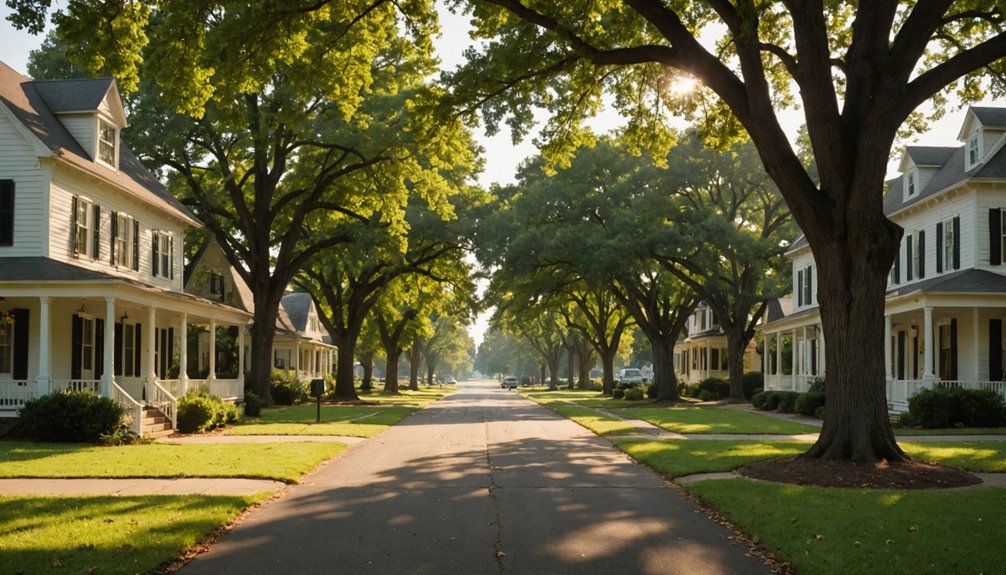
Because Pineville is drawn as a small, close-knit suburb, the setting does more than provide a backdrop it actively shapes who Autumn and Finny become and how their relationship unfolds.
Growing up next door to each other, they built a bond that’s inseparable from the physical space around them. Autumn watching Finny from her bedroom window isn’t just a quiet moment, it’s a reminder that their entire history lives in that neighborhood.
As high school pulls them into different social circles, Pineville’s limited world makes that distance feel sharper. There’s nowhere to escape the tension between private feelings and public roles.
Their mothers’ friendship, the familiar streets, the same local spaces all of it keeps the past present and inescapable.
In a small suburb, missed chances carry more weight because you can’t simply disappear.
Every ordinary location becomes emotionally loaded, and Pineville uses that pressure to deepen the novel’s central “what if” tragedy. Autumn’s identity as a creative, sensitive narrator means she absorbs every detail of this environment, turning familiar places into vessels of memory and longing.
Where Does Ferguson Fit Into the Novel’s Setting?
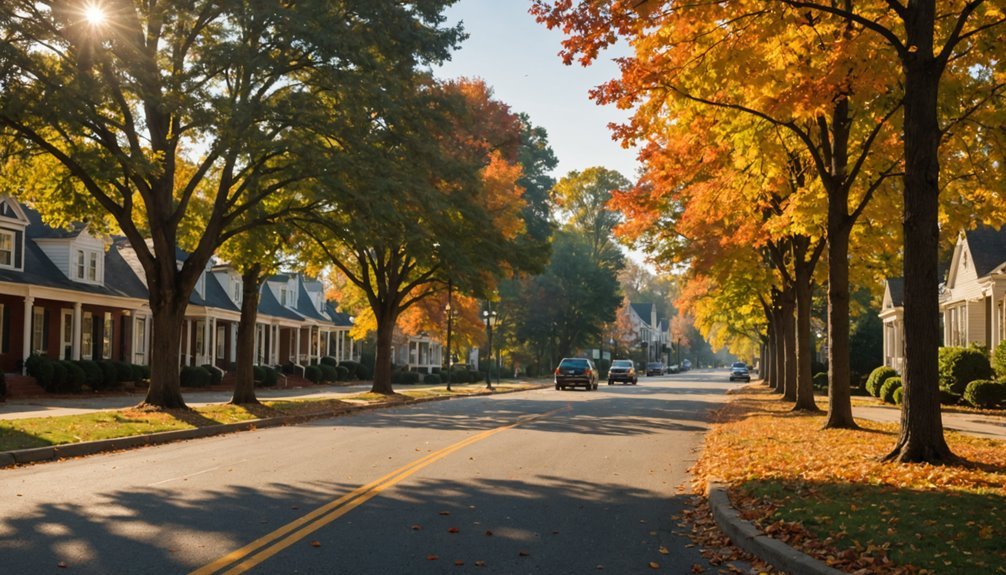
While Pineville shapes the novel’s social pressures, Ferguson does something more foundational it’s where Autumn and Finny’s story actually begins. It’s a small St. Louis suburb built on Victorian houses, brick churches, and a downtown where families have owned shops for generations.
Ferguson isn’t just scenery; it’s the emotional foundation against which the whole story measures change.
Here’s what makes Ferguson essential to understanding the novel’s setting:
- It’s Autumn and Finny’s shared hometown, establishing their earliest connection
- Finny lives in a duplex on Church Street, grounding the story in specific local geography
- The town’s old-fashioned character creates a strong sense of rootedness and continuity
- Ferguson’s stability makes later social fragmentation feel more emotionally significant
- The setting anchors nostalgia, making it part of the novel’s coming-of-age architecture
You can’t fully understand the characters’ relationship without recognizing what Ferguson represents a shared world they eventually grow away from. Both Autumn and Finny attended Vogt Elementary together, giving Ferguson an even deeper role as the place where their bond was first formed.
How Do Pineville and Ferguson Connect in the Story’s World?
Though Pineville and Ferguson are geographically close, their connection in the novel runs deeper than mere proximity. School, family ties, and shared neighborhood routines pull the two places into one lived world. You see characters moving between them without crossing any real social or physical boundary, which makes the settings feel like two parts of the same map.
High school acts as the strongest bridge. It blends social circles through classes, sports, and friendships, so characters from both places stay connected even when their relationships shift.
Every day travel reinforces these short trips, casual encounters, and familiar routines, keeping the two settings tightly linked.
That closeness carries emotional weight throughout the story. Because contact between characters remains possible at any moment, silence and distance become harder to ignore.
The connection between Pineville and Ferguson ultimately sharpens the novel’s themes of missed chances, shared memory, and the grip that place has on personal history.
Why Does a Small-Town Setting Intensify the Emotional Themes?
The tight link between Pineville and Ferguson already hints at something the novel leans on hard — place shapes feeling. In a small-town setting, you can’t separate emotion from environment. Every feeling gets amplified because the world around the characters refuses to stay quiet or neutral.
Here’s why the setting turns ordinary moments into emotionally loaded ones:
- Limited privacy exposes personal choices fast, making shame, vulnerability, and fear of judgment impossible to escape.
- Rumors spread quickly, converting private conflict into community-wide emotional fallout before anyone can correct the story.
- Interconnected relationships mean every argument carries years of shared history, instantly widening the emotional impact.
- Isolation sharpens attachment, making separation and loneliness hit harder when fewer relationships exist to soften the blow.
- Community expectations pressure characters to hide feelings, raising the stakes of every vulnerable moment.
You feel the weight of the town because the town never stops watching.
How Familiar Streets Fuel the Story’s Regret and Loss
When you walk the same streets in Pineville and Ferguson that once carried friendship, laughter, or unspoken feelings, those roads stop being neutral ground.
Every familiar turn reactivates what happened there, so the route itself becomes a record of choices you can’t undo.
That unchanged landscape makes loss feel immediate rather than distant, because the place stays the same while the relationship doesn’t.
Streets Hold Emotional Weight
These streets don’t just move characters from place to place they hold memory:
- The same corner recalls an earlier version of a relationship.
- Repeated routes intensify regret by keeping absence present.
- Small geographic separations between Pineville and Ferguson shape missed connections.
- Ordinary places become permanent emotional markers.
- Familiar streets transform “almost” moments into unavoidable reminders.
Place doesn’t reset. It continues presenting what has changed.
Routine Deepens Personal Loss
Familiar streets don’t just hold memory; they keep delivering it. Every time you walk the same route through Pineville, you’re not simply moving through space. You’re moving through accumulated feelings.
Each corner, each storefront, each familiar landmark reactivates what’s been lost, making regret feel cyclical rather than something you can leave behind.
That repetition does something specific to grief. It keeps unresolved feelings open instead of letting them settle. You notice the small changes a closed shop, an altered route, and those minor shifts carry disproportionate emotional weight because everything else has stayed the same.
The streets preserve what was while exposing what’s gone.
Routine doesn’t soften loss here. It sharpens it, structuring the story so that personal grief unfolds through repeated encounters rather than a single dramatic moment.
What Does the Setting Signal About the Story Before You Read a Word?
A setting can tell you everything about a story before the first conflict arrives. Ferguson and Pineville signal exactly what kind of emotional territory you’re entering. You’re not walking into a world of strangers; you’re stepping into a place where history lives on every street corner, and silence carries weight.
Before the plot moves, the setting already tells you:
Before the plot moves, the setting has already made its promises and its threats.
- Childhood closeness will eventually collide with adolescent distance
- Social hierarchies at McClure High will reshape identities and friendships
- Small-town proximity makes unresolved feelings impossible to outrun
- Familiar places like Church Street become emotional landmarks, not just locations
- Nostalgia and regret will drive the story as much as romance does
You don’t need the first chapter to sense the tension. The neighborhood, the schools, and the overlapping relationships confirm it.
This story isn’t about two people meeting, it’s about two people who never truly got to choose each other.
Conclusion
You’ve now seen how Pineville and Ferguson aren’t just backdrops; they’re active forces shaping every emotion Laura Anderson pulls from you. These towns breathe alongside Autumn and Finny, making their story feel achingly real. When you walk these fictional streets, you feel suburban isolation, a lost connection, and devastating what-ifs. The setting doesn’t just hold the story; it tells it.
Frequently Asked Questions
Is *If He Had Been With Me* Based on a True Story?
No, *If He Had Been with Me* isn’t based on a true story. Laura Nowlin wrote it as fiction, using “scraps of truth” from emotional experiences. You’re reading a story inspired by feeling, not real, documented events.
Who Is the Author of *If He Had Been With Me*?
You’re looking for the author of *If He Had Been With Me*, it’s Laura Nowlin. She holds a BA in English with a creative writing emphasis from Missouri State University and published the novel through Sourcebooks Fire in 2013.
What Age Group Is *If He Had Been With Me* Written For?
You’ll find *If He Had Been With Me* written for teens aged 14–18, though it’s best suited for mature readers 16 and older due to its themes of depression, suicide, and sexual content.
Are Pineville and Ferguson Both Fictional Places in the Novel?
You can’t confirm that both Pineville and Ferguson are fictional places in *If He Had Been With Me* from available sources. You’ll need to check the novel’s text or the author’s interviews to verify its fictional status.
Has the Novel’s Setting Changed Across Different Published Editions?
You won’t find any documented changes to settings across different published editions. The novel consistently uses Pineville and Ferguson as its core locations, and no sources report any changes to the geography in any edition since its 2013 publication.