

In *If He Had Been With Me*, you’ll find that silence carries more weight than grief ever could. Love exists between Autumn and Finny, but fear keeps it unspoken until timing makes honesty impossible. What hurts most isn’t the loss it’s every moment before it when the right words went unsaid. Regret doesn’t arrive with death; it builds quietly through years of withheld feelings. There’s much more to uncover beneath the surface of this story.
Key Takeaways
- Silence functions as the novel’s central force, as withheld words and unspoken feelings cause irreversible damage before any loss occurs.
- Autumn and Finny’s childhood friendship evolves into a complex emotional bond, deepened by shared history but fractured by social distance.
- Fear of rejection prevents both characters from expressing love, allowing emotional tension to persist without resolution throughout their relationship.
- Timing consistently works against Autumn and Finny, as genuine feelings repeatedly fail to align with the right moment for action.
- Finny’s death transforms accumulated silence into permanent regret, leaving Autumn with unanswered questions and an identity fractured by absence.
Why This Novel Is About Silence, Not Just Grief

Silence is the real engine driving *If He Had Been With Me*, not grief. You might expect a novel centered on loss to be primarily about mourning, but the emotional weight here comes from what Autumn and Finny never say to each other.
Their relationship is shaped by withheld words, avoided conversations, and missed confessions that accumulate across years.
The grief you feel at the novel’s end isn’t only about death, it’s about omission. Autumn mourns every moment she didn’t act on, every feeling she left unspoken. The title itself signals this: the alternate reality it imagines exists because of an unspoken misunderstanding, not just a tragic accident.
The grief isn’t about death. It’s about everything Autumn never said.
What makes this story devastating is that the silence comes first. It’s the cause of grief, not its byproduct. By the time loss arrives, years of non-communication have already done irreversible damage, making the ending feel inevitable rather than sudden. Autumn and Adam’s childhood friendship deteriorates as they enter high school, and that silence first takes root, establishing the emotional distance that neither ever fully closes.
The Central Love Story Between Autumn and Finny

You watch Autumn and Finny’s bond shift gradually from childhood inseparability to something neither of them names, letting unspoken feelings create a distance that silence alone maintains.
Their social divergence in high school pulls them apart physically, but the emotional attachment stays active beneath every averted glance and second-guessed moment. Senior year brings a fragile reconnection that deepens their emotions before Finny’s unexpected death cuts the story short, leaving it in permanent silence.
Childhood Friendship Becomes Romance
One of the novel’s most compelling themes is the way childhood friendship quietly transforms into something deeper and more complicated. You watch Autumn and Finny grow from inseparable children into teenagers traversing separate social worlds, and that distance makes their bond feel both fragile and inevitable.
Their mothers’ friendship keeps the families close, so they can’t fully escape each other even when life pulls them apart. By the time romantic feelings surface, they’re not falling for strangers; they’re recognizing something that’s always been there.
That familiarity gives the romance its emotional weight. You understand that Autumn isn’t just developing a crush; she’s rediscovering someone woven into her earliest memories. The story makes it clear that love built on years of shared history carries a different kind of intensity and pain. The narrative uses flashbacks to deepen the reader’s understanding of how much Autumn and Finny’s connection truly meant before the world reshaped them into different people.
Unspoken Feelings Create Distance
At the heart of the novel lies a love story defined not by what’s said, but by what isn’t. As high school pulls Autumn and Finny into separate social worlds, their emotional bond persists beneath the surface, unacknowledged and unresolved.
You watch their interactions carry subtext rather than confession, creating tension through restraint instead of clarity.
Fear of rejection keeps both characters silent, and that silence does real damage. It suspends the relationship between friendship and love, trapping them in “what if” thinking that prevents honest connection.
New relationships and shifting social circles widen the gap further, making the unspoken feelings harder to address.
When Finny dies, Autumn’s regret transforms that silence into grief. The novel makes the cost clear: withheld words don’t just delay love—they can erase the chance to express it entirely.
Love Lost to Timing
The central love story between Autumn and Finny isn’t built on romance it’s built on timing that never quite aligns. Their eighth-grade kiss happens before Autumn is emotionally ready to understand it, and that single misread moment pulls them apart for years.
You watch Finny love her quietly, his kindness reframed only after it’s too late to matter. Autumn spends high school misreading his intentions, moving through other relationships while the most important connection in her life stays unresolved.
When the truth finally surfaces that Finny has loved her since middle school, it doesn’t offer relief. It delivers grief. His death seals their story not as a love fulfilled but as a love defeated by the gap between feeling something and knowing what to do with it. Much like the season that shares her name, Autumn’s story mirrors a transition from innocence, where the weight of what was never said becomes the heaviest thing left behind.
Why Autumn and Finny Never Say What They Mean

Throughout *If He Had Been With Me*, Autumn and Finny’s feelings for each other exist just below the surface, never quite spoken aloud. You watch two people who clearly feel something but can’t bridge the gap between emotion and language.
Three forces drive their silence:
| Force | What It Does | What It Costs |
|---|---|---|
| Fear | Protects from rejection | Prevents clarity |
| Caution | Preserves their shared history | Delays honest connection |
| Avoidance | Reduces emotional exposure | Creates irreversible regret |
Each unspoken word compounds the next. Autumn worries she isn’t enough; Finny never pushes past the surface. They both choose safety over vulnerability, and that choice quietly dismantles what could’ve been.
The novel frames this silence not as shyness but as an active barrier. You understand, especially after Finny’s death, that silence doesn’t protect anyone it just guarantees some truths arrive too late. Finny had even planned to break up with Sylvie to finally pursue Autumn, a decision that never got the chance to change anything.
Why High School Pulls Them Into Separate Worlds
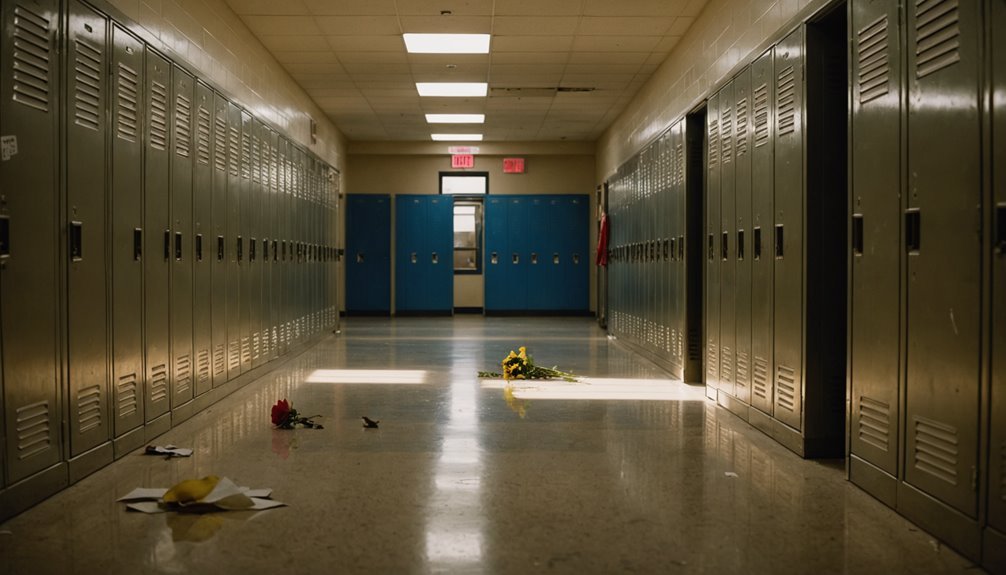
Silence isn’t the only force working against Autumn and Finny high school itself pulls them in opposite directions. Different classes, friend groups, and packed schedules carve out separate daily worlds, even when emotional attachment stays strong. You can feel connected to someone and still drift apart simply because life keeps routing you away from each other.
Emotional connection alone can’t survive when life keeps routing two people away from each other.
High school creates these divides in ways that feel almost invisible:
- Competing schedules leave little room for relationship maintenance
- Separate friend circles make belonging feel split between romance and peers
- Academic and activity demands redirect attention toward individual paths
- Social pressure turns dating into a performance rather than a genuine choice
- Spending more time in different social spaces than together strains even strong bonds
For Autumn and Finny, these structural forces don’t just complicate things they quietly build the distance that makes their story so heartbreaking to watch unfold.
How Silence Shapes Every Missed Chance Between Them

You feel the weight of every word Autumn and Adam never say to each other, because their silence doesn’t protect them it costs them everything.
The bond they share stays suspended between friendship and something more, and that uncertainty builds until ordinary moments become irreversible missed chances.
When loss finally arrives, you understand that it’s not one dramatic failure that breaks them apart, but the accumulated weight of all the things they chose not to voice.
Words Never Spoken
What’s never said between Autumn and Finny carries just as much weight as what is. You watch their silence accumulate into something heavier than any argument could have been.
Every withheld confession reshapes their relationship. Their unspoken words create patterns you’ll recognize immediately:
- Holding back feelings to avoid vulnerability
- Waiting for clarity that never arrives
- Letting hesitation become permanent emotional distance
- Replacing honesty with withdrawal disguised as protection
- Leaving confessions until they’re no longer possible
That silence isn’t empty it’s loaded with fear, regret, and everything they couldn’t say in time. You feel the weight of each missed moment because silence preserves possibility while blocking resolution.
Their story lives inside what remains suspended between intention and expression, never quite spoken, never quite released.
Silence Creates Distance
Every pause between Autumn and Finny quietly widens into something neither of them can cross. You watch their silence function less like rest and more like withdrawal each unspoken word pulling them further from the connection they both want but won’t name.
Without explanation, silence reads as indifference, and Autumn carries that misreading like fact.
They miss every window to clarify what’s hardening between them. Short pauses might’ve built understanding, but their silence stretches long enough to build walls instead.
Eye contact fades. Spontaneity dulls. What looks peaceful from the outside creates real strain underneath.
Distance doesn’t arrive dramatically; it accumulates. And because neither acknowledges the silence itself, it never becomes a question they can answer together.
It just becomes the distance between them.
What Autumn Is Left With After It’s Already Too Late
Grief doesn’t leave Autumn with answers it leaves her with the weight of everything that went unsaid. You watch her carry unanswered questions that no one can resolve, facing an ending that offers no clean closure.
The greatest loss isn’t only Finny it’s the future that never got the chance to form.
What Autumn is left holding after it’s too late:
- Silence that hardened into permanent distance
- Regret rooted in delayed truth and missed timing
- Grief that intensifies her existing emotional struggles
- Love, she recognized too late to fully claim
- Unanswered “what ifs” that define her emotional aftermath
You feel the emotional isolation in her story because nothing repairs what silence destroyed.
She’s aware that different choices might’ve built a different future, and that awareness is its own kind of pain constant, irreversible, and impossible to simply move past.
What Finny’s Death Does to Autumn and the Story
Finny’s death doesn’t just end a life it ends the story’s possibility of becoming something hopeful. The accident arrives suddenly, turning near-reconnection into bereavement and reshaping everything you understood about the novel’s direction. What felt like a love story redefines itself as tragedy the moment Finny dies.
For Autumn, the loss means the loss of the one person who consistently understood her. Without that anchor, her sense of self fractures.
Depression and grief combine, forcing her to rebuild her identity from absence rather than connection. Every unspoken feeling, every moment of hesitation, transforms into emotional self-reproach she can’t escape.
The death also changes how you read everything before it. Earlier silence, earlier indecision, none of it stays neutral.
It all gains weight retroactively, because the ending makes clear that time ran out before anything could be said or resolved. Finny’s absence doesn’t just wound Autumn. It permanently reframes the story.
Why Love Without Timing Cannot Save Anyone in This Story
Love defines the center of this story, but timing determines whether it can survive. You watch Autumn and Finny carry genuine feelings across the years, yet neither acts when it matters most. Affection without action becomes its own kind of failure.
The novel shows you that desire alone can’t shape a future when hesitation keeps overriding honesty. Once timing collapses, love transforms into memory and regret instead of something lived.
Here’s what the story forces you to recognize:
- Unspoken feelings stay powerful, but never become a real partnership.
- Silence preserves longing while blocking resolution.
- The right emotions arrived before the right choices did.
- Grief proves love can’t reverse the consequences of earlier delays.
- Intensity without immediacy turns connection into a counterfactual possibility.
You feel the weight of every almost. The story’s heartbreak isn’t just about loss it’s about how long both characters waited before truth became impossible to act on.
Why the Final Pages Feel Like Losing Something Twice
The ending doesn’t just arrive, it lands twice. You lose Finny when he dies, and then you lose every future you’d been quietly building alongside him. The novel’s structure makes this double blow feel inevitable. From the opening car accident, the story trains you to read ordinary moments as already endangered, so by the final pages, grief isn’t new; it’s confirmation.
What makes it hit harder is the silence. Autumn’s regret isn’t only about his death; it’s about everything she didn’t say while she still could. The title itself points to absence, and the ending delivers on that weight. You feel the loss of the person and the words that never came.
Memory compounds the damage. Earlier scenes return with tragic meaning, and you experience them again through what’s now known.
The final pages don’t close anything; they reopen it.
Conclusion
You’ve watched Autumn carry what she never said out loud, and now you understand why the novel cuts so deep. It’s not just about losing Finny. It’s about every word left unspoken, every moment you let pass because you assumed there’d be more time. This story doesn’t let you look away from that truth. You’re left holding the same silence Autumn holds, and it weighs exactly as much as love does.
Frequently Asked Questions
Is “If He Had Been With Me” Based on a True Story?
No, *If He Had Been With Me* isn’t based on a true story. Laura Nowlin drew from real emotions, personal experiences, and a dream, so you’re reading fiction built from life’s fragments.
How Does Fatherlessness Affect Autumn and Finny’s Emotional Development?
You see fatherlessness quietly shaping both characters, it deepens Autumn’s emotional insecurity and sensitivity to rejection, while weakening Finny’s emotional regulation. Both carry unspoken grief that colors their relationships, identities, and ability to trust others fully.
What Role Does Mental Health Play Throughout the Novel?
Mental health shapes Autumn’s entire journey. You watch her battle depression, worsen seasonally, and spiral into crisis after Finny’s death. Her mother’s struggles add generational pressure, while silence around their pain delays help and deepens suffering throughout the novel.
How Does the Novel’s Ending Compare to Similar Young Adult Books?
Unlike most YA books, where you’d expect a happy confession or reunion, this novel ends with death and mourning, leaving you with grief and regret instead of romantic resolution or hope.
Does Autumn Ever Find Closure or Healing After Finny’s Death?
You don’t find complete closure, but you do find healing. You survive a crisis, lean on Jack and family, carry Finny’s memory forward, and choose life-transforming grief into meaning rather than erasing it.