

Jamie is Autumn’s brooding, dark-haired boyfriend in If He Had Been With Me — and he’s the relationship that looks right but feels wrong. He draws her in with Gothic-prince charm and sweet gestures, but underneath he’s controlling, dismissive of her passions, and pressures her into situations she’s not ready for. His betrayal with Sasha doesn’t just break her heart — it breaks her self-deception wide open. This is the complete breakdown of Jamie’s character, his role in the story, and what his relationship with Autumn reveals.
Key Takeaways
- Jamie is Autumn’s brooding, dark-haired boyfriend whose Gothic charm and striking looks initially make him an appealing romantic figure.
- Despite sweet gestures like gifts, Jamie pressures Autumn sexually, dismisses her passions, and shows controlling behavior throughout their relationship.
- His infidelity with Sasha destroys Autumn’s friendship, social standing, and self-image, marking a devastating turning point in the story.
- Jamie serves as a foil to Finny, highlighting through his flaws what Autumn truly needs in a partner.
- His character drives Autumn’s growth from naivety to self-awareness, ultimately clarifying her real feelings for Finny.
Who Is Jamie in If He Had Been With Me?

Jamie is one of those characters who looks perfect on paper — dark-haired, green-eyed, and striking enough that author Laura Nowlin describes him as a “Gothic prince” and “Adonis” in If He Had Been With Me. He’s Autumn Davis’s high school boyfriend, part of the same misfit social circle she belongs to, and he represents exactly the kind of brooding romantic ideal that teenage hearts chase.
But Jamie’s appeal is mostly surface-level. Beneath that handsome emo aesthetic lies a character who consistently prioritizes his own desires over Autumn’s wellbeing. He’s the boyfriend Autumn believes is her soulmate, yet he ultimately hurts her in ways she never anticipated.
Nowlin uses Jamie deliberately — not to celebrate this type of relationship, but to expose it. He exists as a contrast to Finny’s genuine presence, making Autumn’s emotional journey feel both painfully real and deeply recognizable to readers. The novel follows four years of Autumn and Finny’s lives, giving readers ample time to see how Jamie’s role shapes Autumn’s understanding of love and loss against that broader backdrop.
Jamie’s Gothic Look and Its Appeal to Autumn
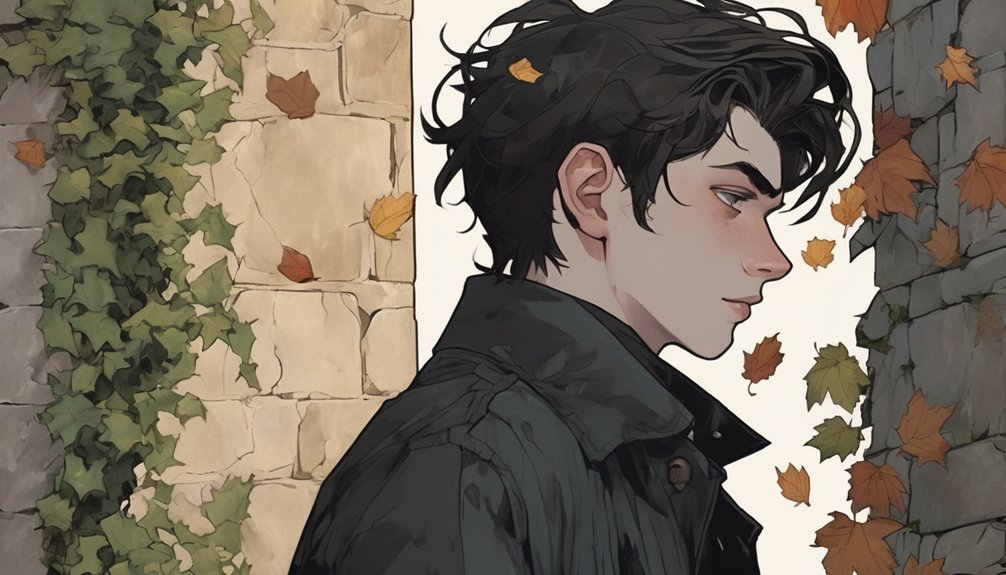
Jamie’s gothic look — the dark, messy curls, the pale skin, the impossibly long lashes — hits Autumn like a physical force the moment he takes her hand. His aesthetic speaks directly to her own outsider identity, offering a visual rebellion against the cheerleader-dominated world that already pushed her out.
What makes Jamie’s gothic look so alluring to Autumn isn’t just aesthetics — it’s identity. He’s a dark-haired Adonis, a gothic prince planted firmly among the outliers — and that visual rebellion mirrors exactly where Autumn lands after the cheerleaders push her out. His look isn’t accidental. It signals belonging to a world outside popularity’s grip.
| Jamie’s Trait | What It Signals to Autumn |
|---|---|
| Dark hair, striking features | Dangerous, alluring charm |
| Gothic prince aesthetic | Rebellion against mainstream |
| Outlier group placement | Shared social outsider status |
| Visual contrast to Finny | Alternative to popularity’s world |
| Prince-like imagery | Romantic, dramatic teen fantasy |
She’s not just drawn to how he looks — she’s drawn to what he represents: a place where she still belongs. But attraction built on shared darkness and aesthetic alignment raises an important question: how much of what Autumn feels is genuine connection, and how much is the seductive pull of an image? That question is the foundation of everything Jamie’s character explores across the novel. Readers on BookTok and Goodreads have noted that Jamie’s character details can be difficult to pin down, suggesting his mystique leaves a lasting but elusive impression — which mirrors exactly how Autumn experiences him.
What Jamie and Autumn’s Relationship Actually Looks Like

Jamie and Autumn’s relationship starts with real charm — he’s the brooding, magnetic presence in their shared friend group, and their closeness feels natural given how much time they spend together. But beneath that appeal, Jamie repeatedly pressures Autumn for sex before she’s ready, dismisses her passion for writing, and strings her along with promises of love and marriage he never intends to keep.
The Early Appeal and the Pattern Beneath It
On the surface, their relationship looks like something you’d find on a mood board for a perfect high school romance. They’re the couple in the misfit friend group, full of sweet gestures and promising futures. But look closer, and the pattern appears:
- Jamie gifts Autumn a charm bracelet on Valentine’s Day, yet pressures her down a steep sled hill and laughs off her injury.
- He promises marriage and forever, but steers her away from writing toward a more “practical” teaching career.
- Their intimacy timeline feels more like a negotiation than mutual choice — he initiates conversations about sex when she’s only 14.
- He’s her comfort during her parents’ divorce, yet his support comes with quiet control.
The appeal is real, but it’s also a carefully constructed illusion. Jamie gives Autumn just enough warmth and commitment to convince her the relationship is solid while simultaneously chipping away at her sense of self through dismissal of her creative ambitions and consistent boundary-pushing on physical intimacy. The pattern that emerges across the three years of their relationship is one of gradual erosion rather than dramatic cruelty — which is part of why Autumn doesn’t see it clearly while she’s in it.
Behind the sweet gestures and forever promises, Jamie’s relationship with Autumn runs on quiet pressure and unspoken conditions. He pushes her toward a teaching career that doesn’t align with her actual dreams, encourages behaviors that aren’t in her best interest, and treats her ambitions as charming but ultimately impractical. That’s not romance — that’s control wearing a familiar face. He also locks her into early commitments about marriage, children, and their shared future, leaving little room for her to grow or change her mind. Autumn sees him as her lifelong partner, but those conversations aren’t partnership — they’re pressure disguised as planning.
Then comes the confession about Sasha. After all that control and all those promises, he betrays her anyway, proving he was never the safe choice he pretended to be.
How Jamie Pressures and Betrays Autumn

Jamie’s role in Autumn’s life carries a weight that gradually shifts from comforting to suffocating. Throughout high school, he repeatedly pressures Autumn into sexual activity despite her consistent reluctance. She postpones, she declines, yet he persists — pushing boundaries within a relationship she’s supposed to feel safe in.
What makes it worse is how Jamie masks this pressure through reliability. He’s the stable, predictable choice — the dark-haired figure who fits neatly into her outlier friend group while Finny exists in a completely different social sphere. That stability creates dependency, and that dependency becomes a subtle form of control. Autumn’s memories of their relationship are mixed precisely because the warmth was real even as the control was real — which is part of what makes the betrayal so devastating when it comes.
Betrayal has a way of rewriting everything that came before it, and that’s exactly what happens when Jamie admits to cheating on Autumn with Sasha, one of her close friends. This confession doesn’t just end their relationship — it dismantles Autumn’s entire identity. Consider what she actually loses:
- Her trust in Jamie, completely and irreversibly
- Her closest friendship with Sasha
- Her sense of self tied to their social standing in the friend group
- Her place within their shared social world
- The narrative she had built about herself as someone in a lasting, meaningful relationship
Autumn confines herself to her room for days, processing a betrayal that exposes how surface-level her bond with Jamie truly was. What looked like the perfect relationship was masking something deeper — her unresolved feelings for Finny, which Jamie’s betrayal ultimately forces her to confront. The regret she feels in the aftermath isn’t just about losing Jamie — it’s about all the time she spent in the wrong relationship while the right connection existed next door.
When Jamie announces he’s in love with Sasha, the story shifts on its axis. Autumn’s world cracks open, and that crack becomes the entire point. The betrayal isn’t just drama — it’s the mechanism that forces real emotional reckoning.
Here’s what that betrayal actually accomplishes for the story:
- It exposes Jamie’s character completely — his disloyalty, his controlling nature, and his unsuitability as Autumn’s partner crystallize in one moment.
- It shatters Autumn’s self-deception — she’d convinced herself Jamie was a lifelong love, and the breakup dismantles that naivety.
- It clarifies her true feelings — the emotional devastation highlights how the Jamie relationship never matched her deeper connection with Finny.
- It propels the central relationship forward — Sasha’s involvement removes Jamie as an obstacle, making Autumn and Finny’s reconnection possible.
The betrayal isn’t a subplot. It’s the story’s emotional turning point.
Jamie vs. Finny: What Their Differences Reveal About Autumn
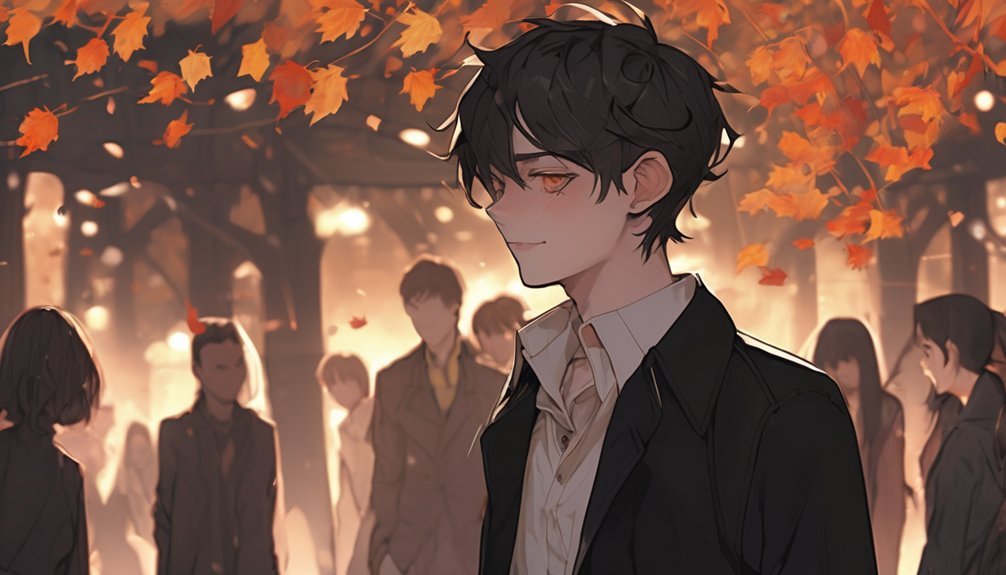
Every time Jamie dismisses her quirks, shows disinterest in her passions, or cites her depression as a reason to leave, the narrative exposes what Autumn needs but isn’t getting. Finny fills every gap Jamie creates. He pays attention to what fascinates her, accepts her nature without hesitation, and steps in during her hardest moments — whether that’s protecting her reputation or showing up during a family crisis.
That parallel structure is intentional. Jamie isn’t just a bad boyfriend; he’s a foil whose failures define Autumn’s emotional requirements. What she tolerates with Jamie versus what she experiences with Finny reveals her growth. The contrast doesn’t just show you who’s better for her — it shows you who she’s becoming.
Understanding this comparison requires looking at the specifics of what each relationship asks of Autumn. With Jamie, she is asked to be smaller — to set aside her writing ambitions, to be ready when he wants intimacy, to accept his framing of her depression as his justification for betrayal. With Finny, she is seen — her writing is recognized as genuine and meaningful, her emotional complexity is accepted rather than weaponized, her past as his oldest friend is something he carries with respect rather than exploits as leverage.
| Quality | Jamie | Finny |
|---|---|---|
| Response to Autumn’s writing | Dismisses it as impractical | Reads it and recognizes her |
| Physical pressure | Pushes boundaries consistently | Relationship built on emotional attunement |
| Response to her depression | Uses it to justify leaving | Shows up during her lowest moments |
| Loyalty | Betrays her with her closest friend | Dies trying to help someone he loves |
| How he sees her | A role she plays in his story | The person he has known longest and loved most |
The heartache of the Finny arc is amplified by the Jamie arc. Without having spent three years in a relationship that slowly diminished her, Autumn’s recognition of what she and Finny could have been would not carry the same weight. The longing that defines the novel’s emotional core is built on the contrast between what she settled for and what she almost had. For readers following this through the chapter-by-chapter progression, see our full chapter summary for how this dynamic develops across the novel.
What Nowlin achieves through this comparison is something more sophisticated than simply presenting a bad relationship followed by a good one. She shows how the bad relationship shapes the person who is eventually capable of acknowledging the good one. Autumn at the beginning of the novel, before three years with Jamie, is not ready to be honest with herself about Finny. The Jamie years — painful and ultimately damaging as they are — are also years of gradual self-discovery. The betrayal is the accelerant, but the growth was already beginning. By the time Finny reads her novel and understands what is inside it, Autumn has become someone who can receive that recognition rather than deflect it. Jamie’s role in her story is to bring her to that point — not intentionally, and not kindly, but effectively.
Jamie’s Role in the Novel’s Themes

Jamie’s character serves several thematic functions that extend beyond his role as Autumn’s boyfriend. Understanding these functions helps explain why Laura Nowlin constructed him the way she did — not simply as an obstacle or a villain, but as a genuinely complex figure whose impact on Autumn runs deeper than a single betrayal.
Jamie as the safe-seeming choice. One of the novel’s core themes is the difference between what seems safe and what is genuinely good for you. Autumn chooses Jamie partly because he is available, present, and part of her world — the outsider friend group that became her home after the social fracture of middle school. He represents stability at a time when her life feels unstable. The tragedy of that choice is not that she was naive or foolish — it’s that the emotional logic of choosing him was entirely understandable. This is something most readers recognize from their own youth: the person you choose not because they are right but because they are there and they chose you back.
Jamie as the foil that defines Finny. Every character flaw Jamie displays makes Finny’s qualities more visible by contrast. Where Jamie dismisses Autumn’s writing, Finny reads it and recognizes her. Where Jamie pressures her on physical intimacy, Finny’s relationship with Autumn is built on years of genuine emotional attunement. Where Jamie’s betrayal is an act of self-interest, Finny’s final act — rushing out to help Sylvie — is one of selfless instinct. The novel builds Jamie’s flaws not to demonize him but to show what genuine care looks like by showing what it isn’t.
Jamie and the theme of regret. Autumn’s regret after Finny’s death is layered with regret about the Jamie years. Every year she spent convincing herself that Jamie was her future was a year she was not allowing herself to acknowledge what she felt for Finny. That compounded regret — for the betrayal she suffered and for the time she lost — is what makes the ending of the novel so particularly devastating. The heartache of grief is intensified by the knowledge of what preceded it. The memories she carries of the Jamie relationship are not simply painful in themselves — they represent three years of choosing the wrong direction.
Sylvie and Jamie as parallel complications. Both Sylvie and Jamie function as the relationships that keep Autumn and Finny from acknowledging their feelings. Sylvie keeps Finny in a relationship he should have ended. Jamie keeps Autumn in a relationship that prevents her from being honest with herself. The parallel is exact. Both are real relationships with real emotional investment, which is what makes the story’s central conflict feel genuinely difficult rather than contrived. If Jamie had been obviously terrible from the start, or if Sylvie had been simply a villain, the story’s heartache would not work. Their complexity as characters is what gives the central relationship its emotional weight.
Jamie and the question of youth. The Jamie relationship also speaks to something specific about how young people process relationships and identity simultaneously. Autumn is not simply choosing a boyfriend when she chooses Jamie — she is choosing an identity, a social world, a version of herself that feels possible and acceptable. The gothic prince aesthetic, the outsider friend group, the relationship that proves she belongs somewhere — all of these represent Autumn’s attempt to construct a self after being socially displaced. Jamie is attractive not just as a person but as a solution to the problem of who she is going to be in high school. That is a very specific and very recognizable kind of youth psychology, and Nowlin captures it with precision.
The aftermath and what it reveals. After Jamie’s betrayal, Autumn doesn’t simply grieve a lost relationship. She enters a period of acute psychological crisis — she isolates, her depression worsens, she loses her social world, and she is left without the structure the Jamie relationship had provided. It is in this state, stripped of the comfortable story she had built around their relationship, that Finny finds her. His presence during her lowest point is what initiates the reconnection that leads to their eventual confession. In this sense, Jamie’s betrayal is the necessary precondition for everything that follows — the brutal catalyst that removes the last barrier between Autumn and the truth of what she feels.
For a complete view of how this plays out in the ending and what Autumn’s grief ultimately means, see our ending explained article.
How Readers and BookTok Respond to Jamie
Jamie is one of the more divisive characters in the novel’s reader community. On Goodreads and across BookTok, responses to his character cluster into a few distinct camps that reflect how differently readers process the relationship.
Some readers despise Jamie from early in the novel and find Autumn’s loyalty to him frustrating. From this perspective, the red flags are visible from the beginning — the sexual pressure, the dismissal of her ambitions, the controlling behavior disguised as commitment — and the three years Autumn spends with him feel like a prolonged miscalculation. These readers tend to find the betrayal cathartic rather than devastating: finally, he is exposed as what he always was.
Other readers, particularly those who read the novel in their teens or recognize their own past relationships in the dynamic, respond with more ambivalence. They understand why Autumn chose Jamie and stayed with him. The warmth was real even if the control was real. The promises were persuasive even if they were ultimately empty. This group tends to find Jamie the most emotionally resonant character in the novel precisely because he is not simply a villain — he is the specific kind of person who can do significant damage while genuinely believing he cares about someone.
A third group focuses primarily on the Finny and Autumn storyline and treats Jamie as largely irrelevant background — the placeholder relationship they need to be over so the real story can begin. For these readers, Jamie’s betrayal registers primarily as a plot function rather than an emotional event in its own right.
What all three readings share is a recognition that Jamie’s character is doing narrative work that goes beyond his obvious role as the obstacle. Whether readers feel frustrated by him, recognize themselves in the dynamic he represents, or simply need him out of the way, his presence in the story is essential to what the novel is ultimately about: the difference between the relationship you choose and the relationship that chooses you.
The BookTok revival of this book has also introduced Jamie to readers who approach the novel already knowing he is not the endgame. For this group, reading with foreknowledge of the betrayal changes the experience — they watch the relationship’s early scenes looking for the signs Autumn misses, which adds a layer of dramatic irony to the Jamie chapters that first-time readers don’t experience. This has made the Jamie discussion on TikTok and online book communities particularly rich, since the community includes readers at different stages of their relationship with the story.
Jamie Across Both Books in the Series
The original novel establishes Jamie fully within his role as Autumn’s high school boyfriend and then exits him cleanly through the betrayal. He is not a presence in the grief chapters — his absence after breaking up with Autumn is part of what makes her crisis so acute. She loses not just a boyfriend but the entire social scaffolding that the Jamie relationship provided.
In the companion novel If Only I Had Told Her, published in 2024, Jamie’s character appears through Finny’s perspective. Finny’s observations of the Jamie relationship — watching someone he loves invest herself in a relationship with someone who doesn’t fully see her — add a specific kind of heartache to the Jamie chapters that the original novel, told from inside Autumn’s perspective, cannot provide. Finny sees what Autumn cannot. His restraint in not acting on this is one of the companion novel’s most painful elements, and it recontextualizes the Jamie years as something Finny witnessed rather than simply heard about.
For readers who want to understand how the two books together change the meaning of the Jamie relationship, our series guide covers both novels and their relationship to each other in full.
Frequently Asked Questions
Does Jamie ever apologize to Autumn for abandoning her? Based on what the novel shows, Jamie never apologizes to Autumn for abandoning her. The story focuses on his betrayal and the fallout without showing any reconciliation. His exit from the narrative is as sudden as his emotional abandonment of Autumn — both represent the same pattern of self-interest that defined his behavior throughout their relationship.
How long does Jamie and Autumn’s relationship actually last? Jamie and Autumn’s relationship spans nearly three years — starting before sophomore year and ending the day after graduation. That timeline covers most of Autumn’s high school experience, which is part of why the betrayal hits so hard. He wasn’t a brief mistake; he was the relationship she organized her adolescence around.
Does Jamie appear again after leaving Autumn during hardship? After Jamie leaves Autumn during her hardship, he doesn’t meaningfully reappear in the story. The narrative shifts its focus entirely to Autumn’s grief and her reconnection with Finny, leaving Jamie’s role limited to the dating phase and his painful exit. His disappearance from the narrative is itself a form of characterization — he leaves as abruptly as he behaved throughout their relationship.
How do Autumn’s friends react to Jamie’s betrayal? The novel keeps the focus on Autumn’s internal isolation and emotional turmoil rather than showcasing the friend group’s direct reactions. Autumn experiences the betrayal largely alone, which amplifies the depth of the loss — she lost not just a boyfriend but the social world they shared and the friendship with Sasha that was its center.
Does Jamie know about Autumn’s feelings for Finny? There is no evidence in the novel that Jamie knows about Autumn’s feelings for Finny. Their relationship struggles center entirely on Jamie’s own behavior — the pressure, the dismissal of her ambitions, and the betrayal with Sasha — rather than romantic rivalry with Finny. Jamie’s obliviousness to the Finny dynamic is part of what makes him such an effective foil: he cannot see what is most important to Autumn because he has never truly seen her.
Does Jamie appear in the companion novel? The companion novel If Only I Had Told Her, published in 2024, retells the events from Finny’s perspective. Jamie’s role in the companion is filtered through Finny’s observations of Autumn’s relationship rather than through direct Jamie scenes. Finny’s view of the Jamie relationship — including his response to watching someone he loves invest in a relationship that diminishes her — adds another layer of heartache to everything the original novel establishes about Jamie’s character.